Showing posts with label Gospel of John. Show all posts

Friday, August 17, 2018

Wonderful World of Wisdom - The Strength of a Sticky Love


Preached on Sunday, August, 12, 2018

Scripture readings: Proverbs 18:9-24; John 15:9-17; Philemon 8-16

“There is a friend that sticketh closer than a brother. (Proverbs 18:24) In these days, we’ve learned to include the word “sister” in this friendship too.
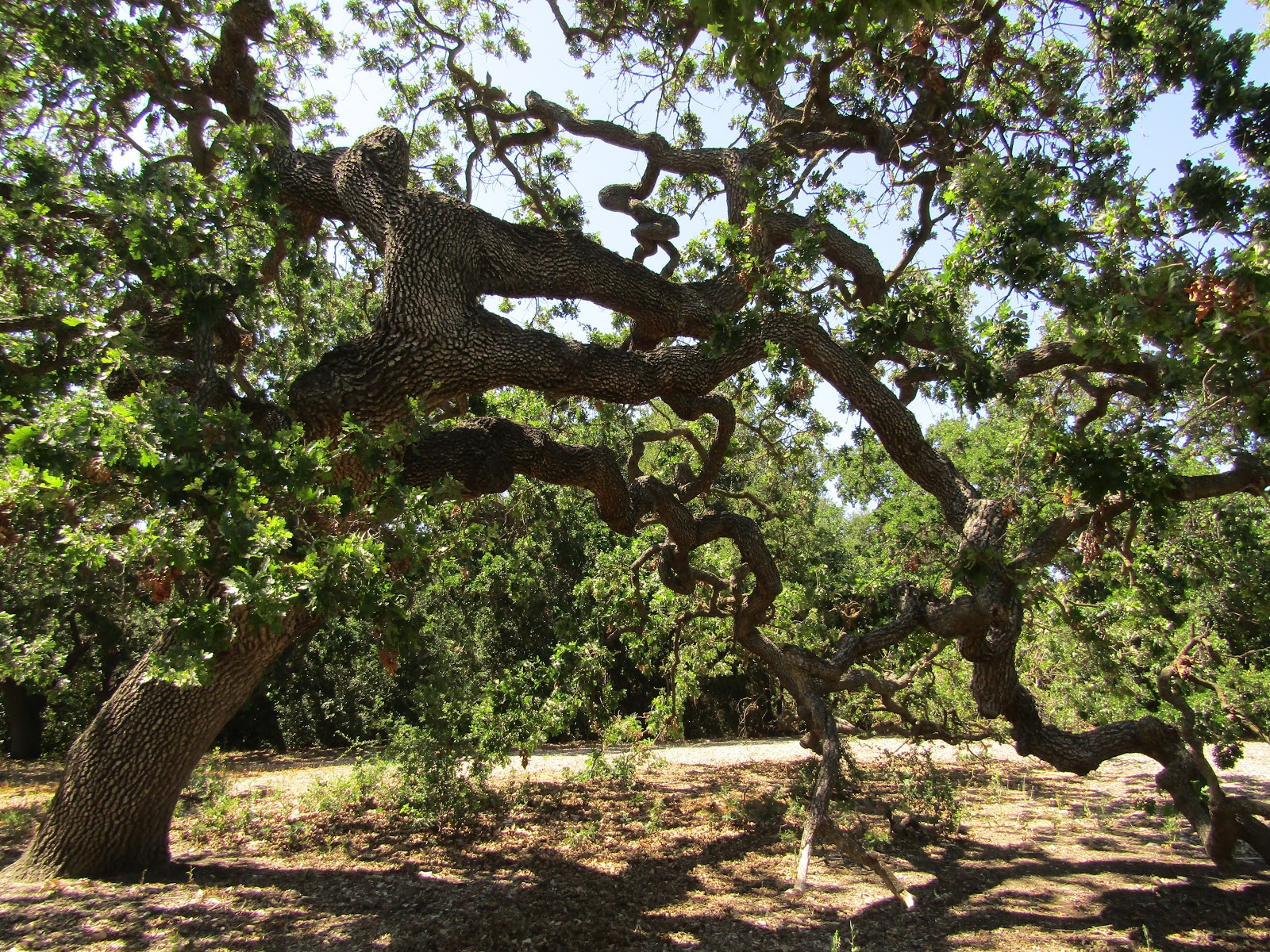
A community of trees in Southern California
June 2018
This proverb is a part of my life because of my cousin Donny; who’s a better Christian than I am and much smarter too. Don is a couple years younger than I am and he became a Christian about the time I was starting seminary. He and I had talked before about what it meant to belong to Jesus, and he was always a good listener. He told me that a lot of people had been talking to him about Jesus. He took a while to decide and I’m not sure that I played much part in it. When he gave himself to Jesus, he grew fast. He was a fast learner.
Don soon found this verse and applied it to the two of us. When we were a lot younger, and outnumbered two to one by our sisters, we talked about being brothers. We lived just a few miles away from each other in those days. Every week, we saw each other and played together, and it meant a lot to me.
 I also always felt that Donny was my friend and my brother, and in Christ we could be the “friends that stick closer than a brother.” That’s exactly what we wanted. Only I am pretty sure that I haven’t lived up to it, which makes me sorry.
If anyone asked me about whether this proverb was really about friends or else more about brothers, my answer would have to be “Yes”. Because that’s what my cousin and I were.
The proverbs all fit together anyway, like the pieces of a puzzle. The proverb has to be about women and sisters just as much as being about brothers, because there is the other proverb in our reading: “He who finds a wife finds what is good and receives favor from the Lord.” (18:22) Surely that’s about finding something even more than a friend and brother together.
Brothers, sisters, wives, husbands, friends are a gift and they are the grace and favor from the Lord. They are a kind of miracle, no matter how much work they take to maintain.
Another piece of the puzzle is the fact that two brothers are like fortress towns that stand close to each other. A fortress town was a safe place. Walls and gates were solid things that you could trust to save you from losing everything, and losing yourself, to be taken away by enemies into exile or slavery.
The problem came when the brothers, sisters, or friends fought. I truly wanted a brother when I was a kid, but as I got older I saw the way brothers fought. That could be nasty.
In the proverbs, it isn’t even about fighting, per se. It was about one brother offending the other. I think you can fight without getting hurt but this was about hurting. We read the proverb that says: “An offended brother is more unyielding than a fortified city, and disputes are like the barred gates of a citadel.” (18:19)
When the two fortresses are friends, and an enemy knocks down your strong, protecting walls, you can make a run for it to your brother fortress. If you make it to the gate, you will be safe. But, if you haven’t taken time apart for your brother-fortress and met your priority to heal each other from the wounds of your fights and offenses, then your brother-fortress might be closed against you. Having a brother-fortress, or a sister-fortress, is a miracle. A brother’s or sister’s shut gate comes when someone has been ungrateful for a miracle. Someone has been ungrateful for the relationship that makes you stronger than just being yourself.
There are friends who are companions. They are connections with whom you eat, and work, and play, and there are friends who are brothers or sisters and these are miracles, because many, many companions can never equal one sisterly friend or one brotherly friend.
“A man or woman of many companions may come to ruin, but there is a friend who sticks closer than a brother or sister.” It’s true there is strength in numbers, but Proverbs would tell us that there is greater strength in trust. There is greater safety in faithfulness.
The God of the Bible teaches us that faith and the faithful object of our faith are stronger than strength. What happens between one human and another, or between just a few faithful humans is a model that points to our relationship with God.
God is the best fortress: “The name of the Lord is a strong tower; the righteous run to it and are safe.” (18:10) Names (even the names of the Lord) are not magic spells that work on their own if you remember to use them right. Names (in the Old Testament) were supposed to reveal what you were made of. The reason that Lord would sometimes change the name of human being whom he was calling (like changing Abram’s name to Abraham) was that the new name would reveal that God was making him into a person who was made of more than he was made of before God took charge of him.
Some people say the name of the Lord is Jehovah, but that was a misunderstanding and a mistranslation of the Hebrew alphabet that began in the Middle ages and continued for a few centuries after that. Which is why Christian hymnbooks and songbooks have the name “Jehovah” in them.
The proper pronunciation is closer to Yahweh. Yahweh is short for “I Am Who I Am” or “I Will Be Who I Will Be”. God’s name is a mystery that carries the message that God is made of bigger and greater stuff than anyone can know.
The message of the name of the Lord is more than a name. The message of the Lord’s name is that the Lord is bigger than you think, so trust him and know that you are safe in his purpose for your life. The reason why the name of the Lord is a strong tower of refuge is that he is always more than you can ever imagine him to be. “I am who I Am” and “I Will Be Who I Will Be.”
Friends, sisters, and brothers are fortresses because we are created to be fortresses for each other. We are created to be fortresses for each other because God has made us in his image, and God is the best fortress of all. God is the ultimate strength and security, and so God has created us to join him in helping, protecting, sheltering, and loving others as he does.
God is our friend. He’s doesn’t get that name in Genesis, although that is where we see God confiding in Abraham, and listening to Abraham, as a friend. Centuries later, during an invasion of the Kingdom of Judah, King Jehoshaphat, asked the Lord for help and described the relationship between the Lord and the descendants of Abraham this way: "Did You not, O our God, drive out the inhabitants of this land before Your people Israel and give it to the descendants of Abraham, Your friend forever?” (2 Chronicles 20:7)
There is a long-term plan, still in effect, and still moving forward, in which the Lord wants to insert his model of friendship back into a world that knows almost nothing of such friendship. You and I are a part of this plan to insert and spread the power of God’s friendship on a lost and alienated enemy planet called the earth.
The plan began with Adam and Eve. It took a great step forward with Abraham, Moses, and Israel.
And then God came down in Jesus, so that he and our human race could get hitched together. God hitched his friendship to us by becoming human, and offering himself as a sacrifice, as a sin-offering, and as a peace-offering, and as a Passover offering to take us out of the slavery of a life where we don’t belong. God is the Passover sacrifice that give us what we need to get to the promised land (or the Promised Life) where we can live like a fruitful vine, bearing lots of fruit in every branch; in every single one of us, pruned and prepared.
In Jesus God did this, letting the sins of humanity kill him on the cross, and then by overcoming the death created by sin, by rising from the dead. The Lord did this because he is the one to whom all models of brotherhood, and sisterhood, and friendship point. Our miracle relationships point in agreement to the greatest miracle of all.
This miracle is the Word of God becoming the action of God, made flesh in Jesus, and offering himself for us in sacrifice and power. In Jesus, God himself lay down his life for his friends: for us, and for those to come. Some of those to come will come to this friendship through us, or through other friends of Jesus who are our friends.
We will be the friends who lay down our lives for new friends, and for our oldest and dearest friend, Jesus. I say this to Jesus, every now and then. When I feel alone I speak to the Lord for comfort. I tell the Lord, “You are my oldest and dearest friend.”
Jesus lay down his life for his friends, including us, so that we can learn how to see him as our friend and lay down our lives for him. When a twelve-year-old child, in some wild part of this world, would rather be beheaded or crucified, rather than deny his oldest and dearest friend Jesus, we can see the power of this friendship. Jesus told his friends that he was doing this so that they, and we, could bear fruit, “fruit that will last.” (John 15:16)
The truth is that we know very little of this power. Christians in the western world get angry and loud at the thought of being humbled, or being pushed to the outside of things. We’re afraid of being the victims of injustice or discrimination.
Not that we should be passive in a free and democratic country. The law allows us freedom of speech, and freedom to vote and we have a duty to use those rights. And we should speak and work unafraid, as the friends of Jesus. The friends of Jesus never panic.
Knowing the model for friendship in the Book of Proverbs helps us to know what Jesus is talking about in the Gospel of John, about the costliness of friendship in the work of bearing fruit. It begins with the laying down of the life of God, in Jesus, on the cross. It continues with the laying down of our lives at the foot of his cross: then, perhaps, we will follow the friendship of Jesus through crosses of our own. We will go on to carry a cross for others so that others can bear fruit that will last.
Perhaps we can say it begins by laying down our lives, here and now, in this place. Then we won’t be, any longer, quite our own.
You don’t just lay down your life by suffering. You also lay it down by belonging. You lay yourself down to make yourself into a safe place for others; to defend and protect others.
When Jesus gave himself for his friends, his friendship took on greater and greater power. Our giving ourselves, here and now, and in the future, will do the same.
The fellowship of the Lord’s Table, here, is another model of the Lord’s friendship. It’s a model in which we participate. As we participate, we find that the friendship grows in this place as we come to the same table (the table of Jesus) together. The bread and the cup are his friendship that we take into ourselves. What we eat and drink here becomes the power that gives life to every cell in our bodies.
With Jesus’ offer to choose and receive us, and with our consent to come and receive him, Jesus himself becomes our bread of life and our cup of salvation. It courses through our blood. Jesus courses through our souls, our inner selves.
It’s a meal with friends. It’s a meal for friendship, and refuge, and mission. It’s a sister-and-brother-fortress.
Belief isn’t about ideas. It’s about trust and it’s about action based on that trust. As the unbelieving slave, Onesimus, became a believer and one who trusted Jesus, he also became like a son and a brother and a friend, at the same time, for Paul. Paul became his father and brother and friend at the same time. We become friends as close as brothers and sisters, as we come to this table, trusting Jesus.
It isn’t that easy to even come to church. It was very hard for me at one time. It was embarrassing. I had to trust Jesus more than I trusted my pride and my fears. Even walking our short aisle to the table takes more giving than you may think. You are coming to something more than you can see, or hear, or sense, and you are trusting that this mystery wants to be your friend.
Let’s receive Jesus, our oldest and dearest friend. He lay himself down for us on the cross. Let’s start by laying ourselves down for Jesus, and for each other, here, now.

Tuesday, July 17, 2018

Good News - The Story of a New Beginning


Preached on Sunday, July 15, 2018. This is the first of two messages about the work of the gospel (which means good news).

Scripture readings: Genesis 3:1-15; John 1:9-14

The Bible tells us about the kind of world and the sort of life that we were designed for: that we were created for. It also shows us a picture of what has gone wrong.
The Next Leg of our Cruise to Santa Catalina Island
June 2018
The part of the story we read from Genesis tells us how things went wrong. If we kept on reading we would see how things got much worse.
But this is no news to anyone. TV, and the radio, and the internet all tell us that too many things are getting worse all the time. We wonder when the next terrorist attack will come, and when the next jet will plow into the next skyscraper. The big world around us shows us that things have gone wrong.
But we see it on the small scale of our own lives. Even in our own homes (or even if we live alone) there can be angers, and stresses, and betrayals, and griefs that eat at our minds. At work, and even on vacation, the things that go wrong can break our hearts, or embitter us, or isolate us.
The Bible tells us that we were designed and created to live in a garden, a paradise, a place of harmony, a place of good relationships. And we lost it. We blew it. The world and human life became broken and dysfunctional things. This happened long before we were born, but it’s a fact of life now.
Long ago the first humans tried to put themselves in a state of independence from God. They thought they could get away with this, even though God is the source of life for all things. God responded to their raid on the forbidden fruit by graciously giving them exactly what they were really asking for. If you want freedom from dependence upon God, then what you really want is a life lived outside the source of life.
They had wanted an independence that was beyond the ability of any creature living in a world made by God. It was as if beings with lungs wanted to live independent of the air, or a fish wanted to live out of water. What hope could there be for a life like that?
And yet God, at their request, did the best he could do in order to give them this unnatural way of life: to be living lungs without air and living fish flopping around on dry land. That first pair of humans found out the hard way that getting exactly what you want can be more a punishment than a gift.
Before the portion of the story that we have read, you can read how God brought all the animals to the man, and the man named them according to their nature. The man was able to clearly read and assess each one of them. But the man did not find among them a companion truly suited to his needs. And since none of the other creatures were capable of giving him the help and the depth of relationship that he needed, God gave him a wife. And the man immediately knew who this person was and how good for him she was.
If we were in harmony with God, we would be like those first humans in the beginning. We would be able to size up anything (and anyone) that came our way. We would know what to do. We would know what was good for us, and what wasn’t. We would know what we needed and what we didn’t need. Any person who came into our life, we would understand, and we would be able to see how that person was a gift from God, and we would know how to deal with that person. We would know what to say to that person, and how to live together.
Our human nature is out of harmony with God. If God brought the very best person, the greatest source of human love to us, we would fail to praise that person properly and give God the proper thanks.
In the temptation, where Adam should have accepted responsibility for his own actions, he blamed his wife instead. And Adam blamed God for giving her to him. And so, in the story, half the human race was divided from the other half, as it has been ever since.
The fall of the human race and the breaking up of human nature shows us who we are. When we do not live in harmony with God, we don’t know how to live in this world. We don’t know what anything is. We don’t know how to relate to our opportunities. We blame others instead of facing ourselves. We allow our pride to divide us from others. It becomes our nature to fight, and hurt, and get hurt.
Before the first humans divided the human race from God, the garden life was a place where you could work and know what you were working for.
With the help of God work can be a blessing but, living in a world that does not work God’s way, you can do all the right things and have nothing to show for it. Farmers know this. You can invest the work of your life in a job, in a marriage, in a way of seeing the world, and end up with nothing.
You can even work so hard, so intensely, that you make the work go bad. The sweat in your eyes makes you fail to see how you are toiling for what you think you want in all the wrong ways. This is what it means to work for thorns and thistles.
Even though we often live broken lives in a broken world, it is not completely natural to us. We see that something is wrong. If we were really designed for the world as it is, and for life as it is, we wouldn’t know any better. We would feel perfectly at home.
But we don’t feel at home. The fact is that most of us know there is something wrong, and sometimes we can imagine the way things should be.
We are not like blind people living in a world where everyone was blind. In such a world there would be no one who would know that there was such a thing as light.
We live in a spiritually and morally hungry and thirsty world. Most of us know that we are missing something. Hunger and thirst tell us that we are made to eat and be filled; to drink and be quenched. At least some of us know that we hunger and thirst for goodness, and for fairness, and justice, and forgiveness, and love, and truth.
This shows us that we were made for a better world than we see around us, and that we were made for better lives than we have the power to live on our own. This tells us that, either the world was once such a place for finding fullness, and harmony, and fulfillment, and satisfaction; or else it tells us that we are made for a better world that is ahead, a better world that is coming.
The Bible and the good news of Jesus tell us about such a world and such a life. It tells us about a paradise that has been lost, and a human nature that has been broken, and about relationships that have been divided. It tells us that we were made for peace with God, and that such a peace would make us able to grow in peace, and in healing relationships with others, and we would have something to give to the world that would make a difference.
The Bible tells us that there will be an end to the world as it is; that Satan and all the powers of evil will be crushed as one might crush the head of a rattle snake when you’ve killed it. The Bible tells us that God has a plan to make each one of us a new person fit for a new creation that is coming.
The Lord told the serpent, the devil, in the garden, that one of the woman’s children would crush the serpent’s head and the serpent would strike the child’s heel. That is the first picture, or prophecy, in the Bible that shows us the healing and the salvation of the human race and the whole world. Everything else is built on this promise.
The serpent is Satan, the Devil, and all his minions, and all the forces of darkness, and all the sin rooted in human hearts, and all the rebellion in human beings that poison nations, and families, and each one of our individual lives.
We are all children of the man and the woman in the garden. We are all sons of Adam and daughters of Eve. We cannot crush the serpent because the serpent is a part of us. At least we are allies of it. It is our very nature to be allies of the serpent, even though we have been made in the image of God and made for life with God. We are divided against ourselves, and so we cannot defeat, for good, the evil in the world and in ourselves.
So God became human to fight the battle that must be fought. God entered the world as Jesus, the son of Mary.
His coming into the world was his own doing. It was his free, and gracious, and miraculous act of love.
There is something in the love of God that is parental, which we call the Father. There is something in the love of God that submits and serves, which we call the Son. The Bible also calls this submitting and serving Son, the Word of God, and the light that enlightens everyone and everything.
The Son, the Word, the Light, says everything about God and everything about us. When he comes to us we see true glory, and holiness, and love, and worth; and we see ourselves just as we are. And this Son, this Word, this light in the nature of God is what led God to become human, to do for us what we could never do for ourselves.
God became human as Jesus to invade us and establish a beachhead in us. In Jesus God built a perfect human life; the kind of life of faith, and compassion, and wisdom that we were created to live.
In Jesus God suffered the injustices, and the griefs, and the pains, and the death that human sin made a part of our life. He suffered the experiences that sin in our nature deserved. He who was without sin died the death our sins deserved.
He was beaten and whipped bloody by those who arrested him and prepared him for death on the cross, but our sins were in those fists that beat him, and in the lashes that tore his flesh. Nails were driven through his hands and feet. His whole body’s weight hung upon those nails, but all the sins and injustices and evils of this world hung upon him. The pain and blood of the cross are the pictures of the extreme and infinite love of God for you. They are his power to reach into you, and claim you, and make you whole.
He bore our punishment on the cross. He went through the gate of death because he was human, and because he was God he broke the power of death, and he broke the power of sin that brought death into the world.
On the cross it was as if all the evil and sin of this world, and of our own hearts, struck the Jesus’ heel and killed him, but Jesus lived again and crushed the serpent’s head.
If we will receive Jesus we receive everything that he is, everything that he has. We receive his grace and his forgiveness.
Everything we have, from then on, and every step forward, is the result of that forgiveness. We never receive the victory of Jesus in order to brag, or to be better than anyone else, or to look down on others. Apart from Jesus we don’t have anything to call our own, but Jesus makes us his own. He makes us children of God.
Even when we first meet God, in Christ, we may be afraid of him because we can see that he wants to take away the hard-won gift that Adam and Eve and the human race have struggled so hard to hold onto. Jesus looks snakey and suspicious because we are used to hiding from the true light of God. That light hurts our eyes and we can’t see what’s good for us.
We don’t want to see ourselves just as we are. We don’t want to know too much about our responsibility. We don’t want to completely escape from the crippling and destructive desires within us, because these desires may give us the only pleasure that we have known; even though they are hurting us and those around us.
We may think we that want God and what God has to give us, but we don’t want it all. We want to pick and choose what God will deal with in us and what we can keep for ourselves.
And, so, the light shows us that the old sin of Adam and Eve is at work in us, wanting to be independent from our very source of life. It is as if we want to be sober and drunk at the same time. It is as if we want to be sick and well at the same time. In that sense we want to live a lie, even when we see all the goodness of God waiting for us in Jesus.
But God is full of grace and truth and he shows us this through his Son. There is no grace or truth outside of him.
We have to die with Jesus and rise with Jesus by receiving him. We have to die to our stubborn independence in order to rise in a life of grace alone: the beautiful and freely given mercy of God alone.
And we have to die and rise with Christ so that we die to our version of the truth and listen only to him. We have to die to the lies we have told ourselves, about our lives, and about our real priorities, and about our true responsibility. We have to die to ourselves, and rise in God’s truth about us and about the new life he sets before us.
Receiving Jesus, the word and light of God, means the deepest surrender. It feels like the greatest risk in the world. It’s like floating on your back when you are afraid of water. It is like sky diving and jumping out of that plane when you are afraid of heights. We have to lose ourselves and give up ourselves in order to put to an end to a life that needs to stop, and to receive a life that comes from God.
The life God gives is a life that we cannot manufacture for ourselves. The life we receive from God has its beginning before the creation and it will never end, and there is no shadow and no fear in it.
This new life will enable us to go forward in harmony with God. It will make us into givers of grace and truth to others, and to the whole world. This new life is the end of something old that we know too well, but this life is only the beginning of something else. To receive Jesus, you have to be ready to begin what only God knows.

Friday, May 25, 2018

Pentecost and the Power of Connection


Preached on Pentecost Sunday, May 20, 2018

Scripture readings: John 15:26-16:15; Acts 2:1-21
We all know people who are connectors. Some people dabble in matchmaking.  Some people always want all their best friends to be friends of each other. But there are plenty of other areas in life where we need to make connections or be the connector.
Walks Along the Columbia River and Crab Creek
April 2018
Sometimes a generation will be the connector in a family. Usually it’s the oldest generation that keeps the branches of a family in touch.
Some of my ancestors were Irish. They owned a farm in county Tyrone, in the old kingdom of Ulster in the northern part of that country. The farm was too small to support all the kids when they grew up about 1850, so all but the oldest son left the farm. Some went to England, some to America, and some to Australia.
They kept writing letters from the very start. Since about 1850 the cousins in Australia and America have been writing to each other every generation. I’m the family connector in America. I write the letters and connect the news on either side of the Pacific. I hold the family together, on my side, as well as I can: to keep going a connection that has lasted one hundred and sixty-seven years.
Someone told me about a grandchild who kept the older generations of a family together, after a divorce had broken up part of the family and made enemies among that older generation.
The child forced the peace. It can be a hard job for a child (and not really a fair job, for a child). Children often show a powerful instinct to be connectors.
Jesus is a connector, building a bridge for us to peace with God through the cross. All the talk, in the Bible, about the faithfulness of God says that it is the nature of God to pursue, restore, and maintain connections.
It is the special work of the Holy Spirit, the Spirit of God, to be “The Great Connector.” The Holy Spirit connects us with all the reality of Jesus. Jesus said that the Spirit, “Will bring glory to me by taking from what is mine and making it known to you. All that belongs to the Father is mine. That is why I said the Spirit will take from what is mine and make it known to you.” (John 16:14-15)
When the Holy Spirit connects us with Jesus we are connected with nothing different and nothing less than God himself: The Spirit, the Son, and the Father. The Holy Spirit is our living, personal, supernatural connection with all the reality of Jesus and all the reality of God.
Jesus calls us to be his witnesses, so that others may know him through us.
The work of being the church and the work of being a witness to the world, and to your family, and to your neighbor is the work of Jesus and the Holy Spirit. The connector, Jesus, gives his connection work to the Holy Spirit, who gives the connection work to us. A witness is a connector. A disciple in the family of the church is a connector. But I want to concentrate on the connection work of witnessing to others.
A witness is a person who has special knowledge, or experience, or a special relationship. A witness is a person who knows what they know, not by hearsay, but by reality. They have seen what they have seen. Or, what has happened has happened to them.
Jesus says that the Spirit “will take from what is mine and make it known to you.” Now, what has the Holy Spirit made known to you, out of the things of Jesus? Or what is there about Jesus that you have discovered, through your connection with the Spirit?
I don’t know whether this is really a good thing or not; but I find that as I get older, I have seen, over and over again, the same pattern taking shape. The pattern of my life is that anything of any importance has taken me a long, long time to achieve.
Some of the most basic parts of living have taken a lot longer for me than they normally take for anyone else. Tying my own shoes, riding a bike, driving a car all took me a lot longer than they normally take anyone else. I look at my personal history, and I see how I have tried my own patience, over and over again; to say nothing of the patience of others, but I have never, somehow, seemed to have tried the patience of God.
I learn that my life must be full of examples of the patience of God, or else I must go crazy. But I also find that the patience of God must be more than only a theory that I can talk about. After all, the patience of God could be nothing but a figment of my imagination, or my wishful thinking. That patience had been a gift that has worked and enabled me to serve God in a way that is a bit different from the gifts of others.
The Holy Spirit is the living, powerful, personal, supernatural connection between the patience of God and the story of my life. And, so, I believe that I could be a good and faithful witness of the patience of God.
If I don’t have that living, personal connection to the patience of God, then I will not be qualified as a witness to that patience. Patience is part of the grace of God. And, if I don’t have the Spirit-connection to that grace, I will not be very convincing.
For one thing, if I am not totally convinced of the grace of God, then I will not be convincingly gracious or patient in my words and my life. I will probably not give much grace to anyone who really needs it. Or, if my words and behavior are gracious and seemingly patient. Others will be able to see though me. My grace and patience will be strangely fragile, or else have a pretend quality to them.
Once, years ago, my dad said something that I thought was the most screwball idea I had ever heard from him, and I told him so. We argued for at least a half hour. I never lost patience with my dad’s ability to listen to reason, when reason was surely on my side. We went on and on and on with this and finally my Dad stopped, and looked me deep in the eyes, and said, “Son, the trouble with you is that you don’t know when to stop.” See how genuine he thought my patience was? (Ha!)
We are, none of us, perfect. That goes without saying. And so, people who have the Holy Spirit’s connection to the grace of God will have lapses and breakdowns of graciousness.
They will need yet more grace for themselves. And they will earnestly, and prayerfully, and repentantly turn to the Lord for that living connection to grace. But, if that is not there, it will become clear.
Does it sound odd to say that when we are being a witness to Jesus, in telling others what we know about him, then we are bearing witness to something that does not belong to us, because it is a gift?  Does it sound odd to say that this is how it is supposed to be? Scripture teaches us to call God “My God” and to call Jesus “My Lord.” But to call him “mine” or “yours” is a gift, and not a possession. It is this way, because what we have is a gift that we call a personal relationship.
You cannot possess a person. A relationship is always a gift.
            I think even being in touch with reality is a gift. We cannot take it for granted.
What we have is like a telephone connection, or an electrical connection. Sometimes, when you are on the phone, the connection goes dead. Suddenly you realize that you may very well have launched into some brilliant or very touching observations, and none of it was heard, because the connection went dead and you didn’t even notice.
Without your personal connection to the reality of Jesus, through the Holy Spirit, your connection with the patience, or the grace of God, may have gone dead, at least for the moment. You have to hang up and dial again. Or let the Spirit call you back.
What are you a witness to? What can you make known about Jesus and his Father, because of what the Spirit has brought home to you? Are you thoroughly connected to grace? Are you thoroughly connected to holiness? Are you thoroughly connected to the truth? Are you thoroughly connected with peace, or the servanthood of Christ, or the fellowship to which Christ calls us together?
Or, better yet, can you stand in the crowd that stands on a hill just outside Jerusalem, at the foot of the cross, with others who were the enemies of Jesus, or those who were indifferent to Jesus, or the friends who denied Jesus and ran away? 
Do you have a living, personal connection to that scene, and do you know that it happened for your salvation; that it happened to give you a new life?
Jesus implies that the Holy Spirit is a great connector. That is what he means when he says that the Spirit will witness, will testify, about him. And, since that is so, we are to testify, too. We are to make ourselves available as junior connectors to the Great Connector.
But it was not enough for the disciples to simply have been with Jesus from the start. They could have tried to be witnesses of the things they had seen, and heard, and experienced. But without the living, present connection, working within them, it would not be enough.
Remember that Jesus said the Spirit would be their new Counselor, their new Comforter? Jesus had been their first Counselor.
Part of Jesus’ job had always included explaining the disciple’s behavior and words to the people who were offended by them: like the time when the disciples walked through the wheat fields, and plucked grain on the Sabbath, or when they ate with unwashed hands.
Jesus had to make the connection between his friends who were trying to be his witnesses and the people they were supposed to be witnessing to. From now on, Jesus said, that would be the work of the Holy Spirit.
We need The Great Connector to do his great connecting between the people around us and ourselves. The miracle of the many languages of Pentecost was just as much a miracle of effective hearing as it was a miracle of effective speaking.
We need the Holy Spirit to graciously explain us and interpret us to others, because we do not often deserve to be understood or listened to. We need that grace first, in order to share the grace of God so radically given in Christ. The work that God has graciously assigned to us will always require his grace to make the real work happen.
And then, if we have this living connection with God’s reality, we will see God at work preparing connections with people, and we will do our best to be on the spot, when and where God is working.
To be in the Spirit is to live in a world that is full of connections in various stages of contact or unraveling. To be in the Spirit is to be amazed at the gaping need for connection with God, and the connection with love of God reaching out to those in need. This need is everywhere.
The test question is: Are you connected with this? And the question that goes along with it is: Can you stand in that crowd, at the foot of the cross, and know that that cross is the price paid in blood for you and paid in blood for the whole world?
You cannot be a witness of Jesus, carrying all our sins on the cross, without that living connection of the Holy Spirit to that cross.
And, still, this is what Jesus promises to give you, through his love and grace.

Friday, May 18, 2018

Jesus - The Perfect Parent for all Parents


Preached on Mother's Day, May 13, 2018

Scripture readings: Psalm 3:1-8; John 10:11-18

It is said that there are two kinds of people in the world. There are those who wake up in the morning and say, “Good morning, Lord!” Then there are those who wake up and say, “Good Lord, it’s morning!”
Walking near Crab Creek, north of Mattawa/Desert Aire, WA
March, 2018
Psalm Three was written by one of those who could go to bed at night thinking, “O Lord, how many are my foes!” and wake up saying, “I wake again, because the Lord sustains me.” (Psalm 3:5) That, by the way, is surely Bible-Talk for saying: “Good morning, Lord!”
It doesn’t seem possible. It doesn’t even seem normal. According to this Psalm, it is the gift of God to wake up well-rested and well-prepared in the morning, when life in this world seems to have you surrounded, and out-numbered, and out-gunned.
We are listening to God speak to us through this Psalm on Mother’s Day and, in a way, we shouldn’t. This Psalm is a warrior Psalm and we don’t usually think of mother’s as warriors, but they are: and so are fathers.
Mothers are mama-bears or she-tigers. Their children and their husbands know this. This Psalm applies to mothers and to all the rest of any family. The Psalm applies to any warrior, and all the people of God are warriors.
And this makes me want to go off on a tangent, because, in some strange way we were created to be warriors. I wonder why, because, if we were created for perfection in a perfect world, as we were at the beginning, why would God have made us warriors?
When God set Adam the Human in the Garden of Eden, God’s mission for humans was to “dress and keep it”. The plan was that we would start with that garden and spread our mission to the whole planet. The word translated as “dress” is “abad”, and it means to serve, and then in the odd way Hebrew has, it also means to be served. Which has a cool farmer’s way of seeing the land: if you serve the land, it will serve you. “Keeping” (or “shamar”) is the real warrior word here because it means to guard and protect the earth, even at the level of fighting for it if necessary.
This tells me that, even when everything is perfect and everything is right, love is ready to serve, and love is vigilant and ready to jump, and save, and fight. True love has to carry a tiger in its pocket. Good marriages, good families, good churches, good communities and nations should all be like this. And there would be a joy, and a proper pride, and discipline in this; because true love is not soft.
I know we’re born for this. A little boy walked up to his mother and said: “I don’t want to be your little lamb anymore. I want to be your little tiger.” We are all created to be warriors under authority and discipline of God.
Jesus was a warrior, and so he shows us what God’s love is like. The tender love of God hides a tiger. Jesus could be really scary; invading the Temple in Jerusalem with his disciples, making whips out of cords, attacking the merchants, whose businesses were based in the Temple to supply animals for sacrifice and the proper currency and coinage for purchases and offerings, turning over their tables and counters, and driving them out. (John 2:13-16; Mark 11:15-17)
By doing this Jesus stopped the sacrifices that most people wanted to make in the Temple that day. He didn’t want them to worship the usual way, because he was there to be the warrior-love who defeated the sins of the world. Jesus made himself scary to do this.
When Jesus and his disciples did this, you must know that they were hopelessly outnumbered by the Temple security. Jesus succeeded scared away the Temples armed police force, because his love was a tiger in his heart. He was scary because he knew he was doing the right thing for everyone he loved: for the whole world that he loved. Jesus showed a warrior-passion for this.
He was claiming the people of Israel, and all those who came from other lands to worship God as his children. He shouted, “Is it not written: ‘My house will be called a house of prayer for all nations’? But you have made it a ‘den of robbers’.  (Mark 11:17)
Jesus shows us that even men can be mama-bears and she-tigers. Jesus was completely committed to his children. He was passionately committed to us; his children to be.
Jesus held nothing back. And yet he was someone whom little children and their parents would never fear. (Mark 9:36-37; 10:13-16)
Like every Jewish child who went to synagogue every Sabbath and to Synagogue school during the week, Jesus grew up singing this warrior Psalm until he knew it by heart. It shaped him, as all the Psalms did. It shaped Jesus’ own awareness of who he was, and what his mission was, and how he would accomplish it.
It was a song of the warrior King David. It sang about his fight to bring order to his kingdom when it was tearing itself apart. There was corruption, and deception, and hypocrisy, and bitterness tearing the kingdom of Israel, and David’s own family was at the heart of that destruction. David knew this, and he hated it, and it devastated him, because he was at the heart of what was wrong.
David had actually played along with what he hated. He had made his own contribution to it. You can read about this in Second Samuel, chapters fourteen through nineteen.
It was David’s failure as a father that caused the crisis, and this failure surrounded him with enemies lead by his own children. But although David had failed, he still trusted God to help him to do his best and to set things right. David had to lay his own life on the line to heal the land.
Part of the song said “Many are saying of me, ‘God will not deliver him.’” David himself was aware that he had made too many mistakes and failed too many times to be “delivered” by God.
David knew that he should be beyond help and beyond redemption. The amazing miracle, the contradiction that seems too good to believe, was the truth that, “From the Lord comes deliverance.” (Psalm 3:8) This is what God stands for, for everyone who has no ground to stand on.
When Jesus learned this song, as a boy, he knew where it came from. He knew that horrible and tragic story behind David’s family and their battles against each other. And he had himself called the Son of David.
Jesus knew that David’s own life had laid him low and left him prostrate, belly and face in the dust, unable to stand in his guilt and his blame, in the presence of the greatest king who is God himself.
“From the Lord comes deliverance.” God was David’s shield when David had no defenses left. God was David’s glory when David had nothing to show but his shame. When David felt too weak and unworthy to do more than lie down in the dirt, God lifted up his head. Jesus came to be the kind of king who does this.
You need to know that this lifting up of the head business was part of a king’s mission. This was something that a king did, when he was faced with a subject, or a servant, or a surrendered enemy, who came to him and groveled before him, face down, in the dust. A king (if he decided to do so), in mercy and grace, would put his fingers under the chin of the person sprawled on the ground, and lift up his head. It was the king’s permission for that person to rise, to get up, to stand, and to know he was accepted, and free, and that he or she would receive an answer from the king that was better than anything they could ask for.
David found this grace from God. It gave him hope and, in spite of all his troubles and all his enemies, he could rest and wake up, prepared to meet the day. I had a pastor who recommended praying this prayer as soon as your eyes open in the morning: “Good morning Lord! What are you up to today? Let me be part of it.”
Jesus learned this warrior song as a child, and he grew up to claim the song for himself, as no one else could. Jesus saw that he had come into this world to have more enemies than anyone could count and, still, lift up their heads.
Every sin, and evil, and injustice in this world is Jesus’ enemy. Every action of ours, and every motive of our heart that works at cross purposes to Jesus, is his enemy. We are his enemies, and Jesus faces us without fear.
But what he wants to do most is to be the lifter of our heads. Jesus does all his fighting for this kind of victory.
In this desperate battle, Jesus was ready and willing to lay down his life for the kingdom. Jesus was willing to have no defenses and no shield against us. He was willing to have no glory that we could see. He was willing to have no pride or weapon, except for the nails in his hands and feet, and the thorns on his head. He was willing to have no shield or glory except for his death on the cross for our sin, and for the sin of the world.
Jesus knew that, giving up himself to all of this, he would be able to lift up his own head, and stand up for us as our king. That makes him the one to lift up our head in his presence.
In the Gospel of John, Jesus said, “I am the good shepherd. The good shepherd lays down his life for his sheep.” “The reason my Father loves me is that I lay down my life – only to take it up again.” (John 10:11, 17)
Jesus knew that, after carrying our sins on the cross, he could lie down in death and wake up again. He could go into the world of death that seems to swallow up everything that is dear to us, and finally to swallow us up as well. He could sleep that sleep, and wake up and rise again, because the Father sustained him. (Psalm 3:5) Then he could offer us grace, and abundant life, and everlasting life.
This was how Jesus claimed that warrior song as his own. David had written a song that was far better than he had realized. It was a song that only Jesus could fully claim. Jesus claimed this song for himself so that he could give it to us; to shape our faith in him.
When I was child there were times when I would get the chance to see puppies. There is a stage where puppies, just like babies, don’t have any teeth. You can put your finger in their mouth and they will chew your finger. They will chew, and chew, and chew; but they can’t bite you. They can’t hurt you. My dad would say, “Watch out, that puppy will gum you to death!”
Psalm Three tells us of God breaking the teeth of the enemy, as if our enemies could bite us and tear us apart. Our enemies are our life’s hurts and injustices. Our enemies are our own sins, and failures, and foolishness.
These have terrible teeth. The teeth do the worst damage, but God can break the teeth of our enemies. We are hurt, but we are not torn. We are crushed, but we can mend. We have consequences to pay, but this does not kill us. They bring us down, prone in the dust, but we can rise, and stand, and fight again, because the Lord lifts up our heads.
In Jesus, God lifts us up. God breaks the teeth of our enemies because the humility and suffering of Jesus give us mercy, and strength, and healing.
Mothers and fathers have many enemies because they have children. They fear for their children. They pray for their children. They know their children will make mistakes. The parents are aware of their own mistakes, too. Parents pray that God will break the teeth of their own failures and regrets, for their children’s sakes.
Mothers and fathers pray that the world will only gum their children and leave them unhurt. But the world is old, and it has long teeth. So, parents pray that the world’s teeth will be broken and that their children will rise again, and again; and that they will be strong, and brave; and that they will be able to rest and wake up prepared for the next day with Jesus, because Jesus will lift up their heads.
The power of Jesus who lay down in death and rose from the dead is our power to rise. Parents receive that power from Jesus in the fellowship of the cross. Parents may often feel crucified for their children. And the parents who know Jesus pray for their children to have that same power of Jesus in themselves.
Jesus came to make that warrior song come true for all of us, as people who take care of others. Jesus came to lift up our heads, to make us warriors who can rise again.