Showing posts with label Jesus Started It. Show all posts

Monday, May 27, 2013

Jesus Started It: A Wonder-Full Life

Preached on Sunday, May 26, 2013

Scripture readings: John 16:12-16; Acts 2:1-20

Three-year-old Kamryn, the granddaughter of David and Karen, was riding in the back seat of their car and, as David was putting the car in gear, Kamryn yelled, “Turn on the wheels! Let’s get going!”

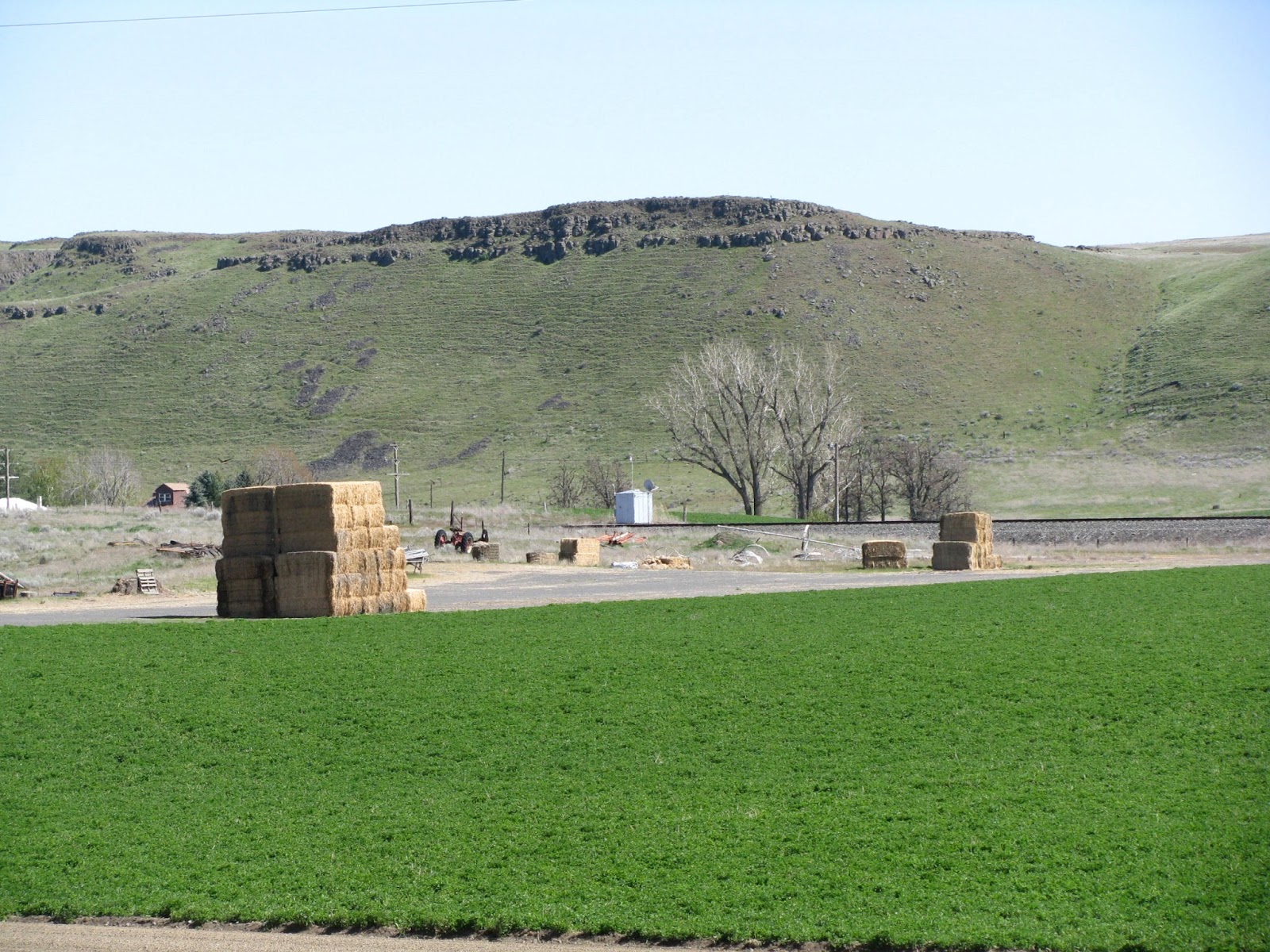
Photos: Washtucna Community Church
And a Drive East Through the Palouse Region
These are good words for the time of Pentecost, for two reasons. For one thing, Pentecost is what we might call, the birthday of the church. Pentecost is when God said “Let’s get going!” Everything got going because the Holy Spirit empowered the church to be what Jesus had called it to be.

And, then, “Turn on the wheels! Let’s get going!” fits Pentecost because they are words of the heart, or the words of a child, to whom the world is new. Pentecost is like the birthday of a new world coming into being before our eyes.

This new world is only new to us because we have been newly born into the timeless and ancient world called the Kingdom of God. This kingdom rules through the new creation of human hearts through the work of the Holy Spirit.

The Holy Spirit fills our hearts with wonder when we open our hearts to its work. We can look at the miracle of Pentecost as it took place so long ago, and gain a basic understanding of what the Spirit wants to do in each of us and in all of us.

There are many things to sort through in the miracle of Pentecost. The wind and the fire are the most important par because these are signs of the presence of the glory of God. This is almost beyond words but you can read a description of this Psalm 29: “The voice of the Lord flashes forth flames of fire….The voice of the Lord makes the oaks to whirl, and strips the forests bare, and in his temple all cry, ‘Glory!’” (Psalm 29:7-9)

The one thing you need to know about the wind and fire is that everyone who belongs to Jesus has fellowship with God in all his glory. Belonging to Jesus and fellowship with God and being filled with the Holy Sprit are all a part of the same thing.

The wind and the fire are the presence of the glory of God. When we are the people of the Father, and the Son, and the Holy Spirit, that glory may be invisible and inaudible but it is always there. In one way, the miracle of Pentecost is simply the experience of what we have been given through Jesus.

We have been given wonders to live with every day. We have been forgiven. We have been recreated in the image of Christ by the grace of God and by faith. We have been made into a new kind of person that hasn’t been seen since the creation of the human race. As hard as this is to see we have been made into people who are fit for paradise.

Paul writes about this reality that we cannot see, or hear, or feel. Paul writes this, in his letter to the Ephesians: “And God has raised us up with Christ and seated us with him in the heavenly places in Christ Jesus.” (Ephesians 2:6)

In the miracle of Pentecost we see that we live in two worlds at the same time. We live in heaven and on earth at the same time. And this should tell us that, heaven and earth are never far apart.

It is important to know that God plans to create a new heaven and earth, and the heart of that plan is his coming to earth in Jesus. Since God has come to earth in Jesus, and died for the sins of the world, and risen from the dead to defeat the power of sin and evil and death in this world. The kingdom and the rule of God, in Jesus, are at work in this world even now.

This plan of God is carried into each person who receives Jesus. Then Jesus sends us out to live for him in this world as his witnesses. The miracle of Pentecost allowed his kingdom his live and work among the people of his new creation. His kingdom works through us as he fills us with his Holy Spirit.

If you look further than the miracle of the wind and the fire of Pentecost you will find the miracle of the tongues or languages of Pentecost.

People from all over the known world had come to Jerusalem for the feast of Pentecost. It was one of the celebrations of the exodus when God brought his people out of slavery in Egypt. It was also a harvest festival. Most of all, it was a good, safe, comfortable time of year to travel, and people made the most of it. People of the Jewish faith travelled to Jerusalem for Pentecost in even greater crowds than for any other of the great feasts simply because it was a good, safe, and comfortable time to travel.

What we see, in the miracle of Pentecost, is that people of many different ethnic origins were out in the streets when the disciples left the house speaking in many different languages. The disciples had never learned to speak these languages. The power of the Holy Spirit gave the disciples the supernatural ability to speak these languages. There is no further mention in the Bible of these disciples ever communicating the good news of Jesus in this way.

In some ways, this miracle was completely unnecessary, and that’s what makes it so amazing. If the disciples had gone out into the street filled with the Spirit and speaking only Greek, which they all spoke anyway, pretty much all the ethnic groups on the street would understand them perfectly well.

In those days, Greek was the common second language of almost everyone between India and the Atlantic Ocean. Greek was the English of the ancient world. Those with the means to travel to Jerusalem would surely know Greek.

But many of them would have had a native language, a home language or dialect beside Greek. Greek was the language of business, and trade, and travel. The miracle of Pentecost was the miracle of the people of Jesus being able to speak in something much better than a language their hearers could understand. The miracle was their brief, God-given ability to speak to others in the language of their heart, and their upbringing, and their passion.

As important as the mind is, our minds have fortifications built around them to protect us from what we don’t want to hear. Our hearts have played a part in building those defenses.

In so many ways we all offer Jesus little more than a blank wall to talk to, instead of letting him speak to our heart. If we imagine the work of the Holy Spirit as the construction of a new creation; then the fullness of the Spirit tears down the old and builds up the new. The Spirit has to tear down those defenses.

The miracle of Pentecost was a supernatural power. It enabled the disciples to be witnesses of Jesus by breaking through all the defenses and speaking to the hearts of others. Some of those others listened and they heard wonderful things. “We hear them declaring the wonders of God.”

Jesus said that the Holy Spirit would introduce us to wonders. “I have much more to say to you, more than you can now bear….the Spirit of truth….will bring glory to me by taking from what is mine and making it known to you. All that belongs to the Father is mine. That is why I said the Spirit will take from what is mine and make it known to you.” (John 16:12-15)

The Holy Spirit makes us know the wonders of God, not only as a matter of our mind, but as a matter of our hearts. The Holy Spirit smuggles the wonders of God past our defenses in order to bring those wonders to our own hearts. Then we can share them as if we were children speaking to other children. Then the Holy Spirit reaches out through to the hearts of others.

The wonders of God are the wonders that belong to Jesus. How could someone like Jesus be the king, in whom we meet God face to face? How could the kingdom of God be not a matter of armies, and laws, and governments, but a matter of the heart; the forgiveness of sins, life changing mercy, dying to ourselves in order to live in Christ? The Holy Spirit tells us how.

The wonders of God are the cross and the resurrection. As the miracle of Pentecost went on, the people who listened were “cut to the heart”. (Acts 2:37) God reached their hearts.

Even though they were not in Jerusalem when Jesus was crucified, the people in the crowd of Pentecost were involved in it anyway (as we all are) because they were sinners. They had the rebel nature planted in their hearts. They would have done it if they had been there, just as we would have.

And the mercy and power of King Jesus was being offered to them. Here were the wonders that cut them to the heart: wonders that made them weep and want to change.

They felt joy and sorrow; sorrow and joy. And so they wanted to know what to do. They were like the child yelling, “Turn on the wheels! Let’s get going!”

The miracle of Pentecost was something Jesus had told his friends to wait for and pray for. This way of life, in which we are given the power to speak to the heart, is something for us to watch, and wait, and pray for. Try as we might, we know we can’t do it on our own.

Someone you know needs someone who can speak to their heart with the good news of Jesus, with the good news of mercy, with the good news of a new way of life. God has a right time and place for that person’s heart to hear the news they need most. The right time and the right place, along with your waiting heart, may be the time and place of the fullness of the Spirit for you and for them.

The miracle of Pentecost made it possible for the disciples to be what Jesus wanted them to be, and to do what Jesus wanted them to do. Jesus said, “But you will receive power when the Holy Spirit comes on you; and you will be my witnesses in Jerusalem, and in all Judea and Samaria, and to the ends of the earth.” (Acts 1:8)

Being a witness for Jesus involves who you are and what you do, just as much as what you say. Jesus said to his disciples, “By this all men will know that you are my disciples, if you love one another.” (John 13:35)

Remember that Jesus said this right after he had washed his disciples’ feet. He said to do the same for others. In the call of Jesus to be witnesses we are also called to be lovers, forgivers, and foot-washers.

The miracle of Pentecost gave the people of Jesus the power to be and do whatever they needed to be and do to in order to give their witness for Jesus. Jesus told them to wait, and waiting was to be a time for hoping, and anticipating, and praying, and desiring. Why should God give us something we don’t desire? We all need to spend such time with God.

For the fullness of the Spirit (the power to be and to do what Jesus has made possible) the requirement is to approach it as a deeply desired miracle. We approach it with longing and prayer.

Being “filled with the Holy Spirit” is much more than a mere experience. Being filled with the Spirit is an empowerment for a purpose that needs the partnership of the Spirit to keep us going.

The Holy Spirit helps us meet one of our greatest needs: simply our need to think, and speak, and act like a lover of Jesus. The disciples prayed for this filling of the Holy Spirit, time and again, because being filled with the Sprit is not a status you can claim, or a promotion in the Christian life. It is a constant need you can never outgrow.

There is a much stranger side to the miracle of Pentecost. That is the fact that many of the people who were there did not see it.

If they were charitable skeptics they could have seen it as grown people babbling like little children who have gone hyper. What we hear them say is that they saw the miracle as grownups who were drunk. “They have had too much wine.”

Peter replied, “These people are not drunk as you suppose. It’s only nine in the morning!” (Acts 2:15) And so Peter started the first Christian sermon with a joke.

The miracle of Pentecost did not make life any easier for those disciples, because it left them ordinary, just as it does with us. Anyone could dismiss them out of hand. Anyone could find reasons to ignore their message and their lives. “Are not these men who are speaking Galileans?” (Acts 2:7) Are these people not peasants?

Paul wrote what it felt like to know the wonders of God’s love and his own unending ordinariness. “We have this treasure in jars of clay to show that the all-surpassing power is from God and not from us.” (2 Corinthians 4:7) So all the drama of Pentecost left them looking ordinary, and even feeling ordinary.

True miracles never say anything about us, or even about our faith. True miracles always point to God, never to us. Ordinariness is God’s protection against the danger of pride.

Jesus started it all. Jesus, in spite of the wonderful things he said and did, always appeared entirely ordinary. This must be at the very heart of the plan and the miracle Christ living in us. We might wish that we were not ordinary anymore, but this is a gift and it is something we very well equipped to give to God.

When I was about nineteen or twenty I tried to work out how to follow Jesus’ call for me to be in the ministry. It was a calling that first came to me when I was twelve. It was a calling I had not wanted, for many good reasons. I knew that I was the most unlikely person in the world to do what I am doing now. There was no way that I could make people believe that I was called by God to be a minister or pastor.

I was not mistaken. It turned out to be a real problem, over and over again. In fact it’s a problem that has never entirely gone away.

I decided, at that time, that my gift would be to have no apparent gifts. I would do what the Lord called me to do, and let him take care of the rest. My obedience only required me to desire to do what God called me to do, and to desire to be what God called me to be.

Augustine the fifth century Roman Christian wrote, “O Lord, grant what you command, and command what you will.” It appears that this is the very thing he does command: for us to be ordinary, and yet filled with him.

We can be perfectly ordinary, obviously ordinary. And we can pray for the power of the Holy Spirit to fill our ordinary lives when, and where, and however he grants it. So, “Turn on the wheels! Let’s get going!”

Monday, May 20, 2013

Jesus Started It: An Organized Chaos

Preached on Sunday, May 19, 2013
Scripture readings: 2 Corinthians 8:1-15; Acts 11:19-30

There is a saying that goes, “Life is what happens to you while you’re busy making other plans.” Another saying, like the first, goes, “If you want to make God smile, then tell him your plans.”

Photos Taken Around Hooper and Benge, WA, May 2013
The Book of Acts is an adventure story. It’s also a book of surprises. It’s also a story with a plan. The Lord is the author of the story. He is the author of the plan behind the story.

The strange thing about this story is that the author is also one of the figures inside the story. He has come into his own story (which is also our story) and He is the major player within this story. He came into his own story and made friends with the other characters of the story (including us). He made them (and us) capable of being partners with him. He has told his plan to the other figures inside the story (like the disciples; Peter, and James, and John; and like us).

It is important to keep the plan in mind while you are reading the Book of Acts. Jesus, the real author behind the writer Luke, summed up the plan in a meeting with his disciples. (We are meant to be eavesdroppers inside this story, and to hear the plan for ourselves.) The plan went like this: “You shall be my witnesses in Jerusalem, and in all Judea and Samaria, and to the ends of the earth.” (Acts 1:8)

Jesus meant that they (and we) were being ordered, by his plan, to make disciples of everyone around the world; not just the Jews, but all the nations, and all kinds and sorts and backgrounds of people. (Matthew 28:19) Their mission and their lives (as well as ours) were to be organized around this central plan.

The next surprise about the story is that the very people who knew Jesus best, and were full of the Holy Spirit of God, didn’t follow the plan. They didn’t follow the plan except by surprise, and by their response to seeming chaos.

They dithered with the plan. They messed around as if they didn’t know the plan.

They look like faithful witnesses. The shared Jesus with others, and many others came to know the beauty and power of Jesus, and the kingdom of Jesus, and the Spirit that Jesus sent into their hearts. They shared Jesus with great courage in the face of imprisonment, torture and death.

And yet they were not following the plan. They were active, courageous, compassionate, spiritual, prayerful, and bold. They were genuine and strong in their faith. And they were ditherers. They were the seriously dithering friends of Jesus. As much as possible (at least at first) they stayed as close to home as possible with people (as much as possible) very much like themselves.

They did wonderful things. They witnessed to Jesus and they saw the work of Jesus and his Spirit being done all around them. But they clearly didn’t know what they were doing. They were an organized chaos.

They had no plan of what to do next, and the results were always a surprise. There were results, not because they followed the plan, but because the Lord of the plan (and the Spirit of the planner) followed his disciples around, and pushed them all over the place, and even went ahead of them. The Lord of the plan (and the Spirit of the planner) got things done through the disciples, and for them, in spite of their dithering.

The disciples took the good news of Jesus to the half-breed, traitor Samaritans because the persecution led by Saul drove them there. The Lord told Peter to go not very far to the home of the Roman centurion Cornelius to share Jesus with that Roman family and their friends. (Acts 10) The Holy Spirit told Philip to go not very far to share Jesus with a high ranking member of the Ethiopian government. (Acts 8:26-39)


Then more of the people who had been driven off by Saul finally got to the great Roman-Syrian city of Antioch. When they got there they did something that none of the disciples seemed to have thought of doing. They shared Jesus with the pagans, with the non-Jewish people of that city. They built a great Christian community among them. It’s important to notice that Luke tells us that, “The Lord’s hand was with them.”

It’s important to remember that persecution and not intentional organization made this happen. Those disciples who went to Antioch were where they were because their original intentions were upset and they were running for their lives. They had not been thinking about any plan. They were winging it.

They were doing the best that they could in a world that was ready, at any moment, to turn against them. They found themselves sharing good news that had almost gotten them killed.

In some way it didn’t make sense. They had been defeated and driven from their homes, and so (naturally) they were in the very place where the Lord wanted them to be. They didn’t really know where to go next, and so (logically) they were the ones who were sent to show the way.

This is a part of what Jesus started. It is an organized chaos. In the Biblical model of things, the conditions under which we will be called to serve and function will not always be the conditions we intend or want. That does not mean we will not thrive, but it will be an odd kind of thriving.

The thriving of the Christians in Antioch is described this way: “The Lord’s hand was with them.”

Here is one example of thriving that Paul gives us in his second letter to the church in Corinth: “We want you to know about the grace that God has given the Macedonian churches. Out of the most severe trial, their overflowing joy and their extreme poverty welled up in rich generosity; for I testify that they gave as much as they were able, and even beyond their ability.” (2 Corinthians 8:1-3) In Paul’s description of things, we can see that, “The Lord’s hand was with them.”

In the midst of severe trial (which probably means persecution) and in the midst of extreme poverty (probably due to the same persecution and because a large percentage of the early Christians were poor, or even slaves) the Christians in Macedonia were still givers by nature. Paul says this, “They pleaded with us for the privilege of sharing”. (2 Corinthians 8:4) They surely believed that, “the Lord’s hand was with them.”

This teaches us a lesson about what it means to be full of the Holy Spirit of God. The fullness of the Spirit is not a kind of inspirational experience. It isn’t something that happens to you and makes you sit back and say, “Wow, I am Spirit filled.”

The fullness of the Holy Spirit is a kind of equipment. It is an ability that is actually a gift.

It is the gift of the working of God in your life for the purpose of making you a partner with the working of God in the lives of others. When Luke tells you, in Acts, that someone was full of the Spirit, or filled with the Spirit, he always tells you the results of it. He tells you the outcome of that fullness. He tells you what the presence of the Holy Spirit made possible.

Luke tells us, in the Book of Acts, that the disciple named Barnabas was sent by the apostles in Jerusalem to size up what was going on in Antioch. Luke tells us that Barnabas was “a good man, full of the Holy Spirit, and faith.” And he tells us that when Barnabas “arrived and saw the evidence of the grace of God, he was glad and encouraged them all to remain true to the Lord with all their hearts.” (Acts 11:23-24)

The fullness of the Spirit, the goodness, the faith, the gladness, and the encouragement of Barnabas are all part of the same thing. These are all part of the fullness of the Holy Spirit in Barnabas.

Some people, claiming to be full of the Spirit, could have gone up to Antioch and only seen disciples gone amuck. They could have seen the disciples who went to Antioch crossing a forbidden line, and leading people astray by giving them a false hope.

It was hard for the original members of the Jewish Christians to stop thinking that Jesus was a Jewish Messiah and not a Messiah for everyone. They kept thinking that anyone outside of the family of Israel had to come inside the family and inside the Jewish law in order to receive the Jewish Messiah. They may have been full of the Holy Spirit themselves, but they were not allowing themselves to see what the Holy Spirit was doing, and what the Spirit wanted.

In this way, they were not full at all. It was only a claim that they made based on their experience and not based on their partnership in what the Spirit was doing. In the eyes of those who only claimed to be full of the Spirit, these Gentiles could not, under these circumstances, be genuine Christians.

The true fullness of the Spirit enabled Barnabas to see the grace of God at work. The goodness that was the fruit of the Spirit in Barnabas saw the goodness that was going on in the Christians in Antioch. The faith made possible by the Holy Spirit, made it possible for Barnabas to see the authentic and deep faith of the Christians there. He saw that they were “true to the Lord with all their hearts” and he told them to always keep watch over their hearts and stay that way.

Someone who only claimed to be full of the Spirit would have looked and seen chaos. Barnabas looked and saw an organized chaos. It existed where it shouldn’t. Out of what seemed to be chaos, the Holy Spirit worked out the plan.

It started (seemingly) without any forethought or plan. But it was planned by the Lord of the plan and worked out by the organizing power of his Spirit.

The disciples in Jerusalem had not sent missionaries to Antioch. The missionaries drifted there because Saul’s old hatred and persecution had driven them there. But the grace of God had been hidden in that old, long-gone hatred of Saul.

In his old days, Saul had seemed to create chaos. Saul had blasted their easy times to pieces. And the organization of the Holy Spirit reassembled the pieces into a new and surprising shape. It all turned out to be the plan of Jesus; as they knew it should have been all along.

When we are comfortable we really don’t know as much about the Lord’s hand and the Lord’s grace as we think. The fullness of the Spirit enables us to see the grace of God and the Lord’s hand where others may very well not see it at all.

We look at ourselves, and we look at the state of the church in the world around us, and we may not see the presence and the opportunity of the grace of God. We may not see the Lord’s hand with us.

Goodness, the fullness of the Spirit, and faith: these, will enable us to see what we are to do. These will show us where we are to pitch in, and lend a hand, and work in partnership with the Holy Spirit.

They showed Barnabas how to adapt to a complete surprise. They opened up to him a whole new concept and model for doing things, and for being Christians, and for being the church.

There is really no way to prepare for this. Organized chaos seems to be the way the Holy Spirit drives the people of Jesus outside of themselves and into a new life.

This is founded on Jesus. He was the Messiah who took his people completely by surprise; so much so that they killed him.

Without knowing what they were doing they made him a sacrifice for their sins and for the sin of the world. Jesus offered up himself, under the evil and the sin that the world had laid upon him, and he died for it and he rose from the dead to defeat it. This too was a surprise.

Jesus, and what he did, threatened the organized structure (the organized ideas) that his people had built to cope with the world as it was. Jesus was a dangerous chaos to them, and they hated this about him.

Paul said, “For you know the grace of our Lord Jesus Christ; that though he was rich, yet for your sakes he became poor, so that you through his poverty might become rich.” (2 Corinthians 8:9) Jesus had become poor in his life and on the cross in order to give them the riches of his life in them. They also needed to become poor in order to truly live.

They needed to die to themselves. They needed to be with Jesus on the cross, so that they could rise to a new life with a new order and with the riches of the life of Jesus and the Spirit within them.

This is the heart of the plan. This is the new organization of God that overthrows the order that we would choose for ourselves, if we were in charge.

The new life and the new order for living (that come from God and are a part of the kingdom that Jesus gives to us) are also things you can never plan. They are God’s surprise and they seem to require us to walk through chaos that is actually organized by the Holy Spirit. The Spirit can help us see this, and walk through the chaos by faith, and find, for ourselves, that the Lord’s hand is with us.


Wednesday, May 8, 2013

Jesus Started It: Breaking Down Walls

Preached in Kahlotus on Sunday, May 5, 2013
(Adapted from a sermon that was preached on 5-20-2007)

Scripture readings: Matthew 25:31-46; Acts 11:1-18

I was twelve when my family moved to a small town in the Sacramento Valley. Everything was different from what I had known before, and I didn’t know anybody. My class was divided into two classrooms (two teachers), and we would switch classrooms after lunch.


Photos Around Washtucna in April 2013
There was a boy in the other class named George. I seemed to get along with him from the start and we would hang around together for lunch, and during breaks. One day, Mrs. Hendrix, who taught us English, and History, and a few other things, warned me to stay away from George. She wouldn’t tell me why, but she warned me that he would be a bad influence on me. She even talked to my parents and warned them about George, and my parents had a talk with me about how I needed to keep away from George.

For some strange reason, I never found out what was wrong with George, and I think he moved away, the next year. I never asked any of the other kids, because I was new, and I was afraid of looking stupid. I also hated being in trouble with my teachers and my parents.

So I avoided George. And I knew that he knew what was going on. I built a wall between us, and I made other friends. There must have been something wrong, that I couldn’t see, that the grownups were protecting me from.

Maybe it is a good thing that I will never know the answer to that. It is just one of those things that I think about from time to time.

The Book of Acts teaches us how to see the kind of changes that the Holy Spirit likes to make in the followers of Jesus. There are patterns in the life and work of the Holy Spirit!

One of the patterns of the Spirit is the pattern of welcome. The Holy Spirit breeds a special brand of welcome. It is the kind of welcome that not only opens doors between people, but crosses borders, and breaks down the oldest walls.

The first chapter of the Book of Acts warns us about this. Jesus tells his disciples that they were being called, and sent by him, to be his witnesses, “in Jerusalem, and in all Judea and Samaria, and to the ends of the earth.” (Acts 1:8) Jesus commanded his people to go and reach out; to cross boundaries.

The first few chapters of the Book of Acts tell us that the disciples started out by not going anywhere. They might have thought about it, but they didn’t go and do it. It’s true that they had plenty of things to think about, and worry about; and a lot of things to do. The truth is that they would never have gone anywhere unless the Lord has essentially forced them to reach out and to cross those boundaries: to bring the presence of Jesus to people who were not at all like them. 

In the eighth chapter of Acts, persecution came, and most of the Jewish Christians in Jerusalem were scattered. Some of them actually found shelter among the traitorous-half-breed Samaritans, and they couldn’t help sharing Jesus with them, and the Samaritans received Christ and the life of the Holy Spirit.

Philip brought Christ to an Ethiopian in the desert. The Ethiopian took Christ with him, in turn, to his homeland far away, south of Egypt. That was one of the ends of the earth in the ancient world.

Then, Peter was staying in the house of Simon the Tanner, in the town of Joppa, on the coast west of Jerusalem. It was a surprising place for Peter to stay, because there was a prejudice against tanners. There were Jewish tanners, but, since tanners worked with dead animal products (hides), they were always what they would call “ritually unclean”.

Respectable, pious brothers and sisters of the Jewish people would avoid touching a tanner, or a member of a tanner’s family, or even the guest of a tanner (like Peter), or anything a tanner might possibly have touched. (Of course, once leather was processed it was OK to touch. Leather was alright to touch, but not the tanner who made it.)

So the borders that Jesus had talked about to his disciples (the borders they would have to cross, to be his witnesses) were not just borders measured by miles.

Jesus was interested in the ability of his people to cross borders of respectability and unrespectability. Jesus wanted his people to cross the borders of untouchability.  Jesus wanted his people to cross the borders between people that are drawn by culture, and by history, and by income, and by family background, and by behavior, and by conflict and misunderstanding.

Those borders are not lines drawn in the sand. They are walls and no-man’s lands full of razor wire and explosives.  But Jesus wants us to cross those borders with his love and compassion, and with the message of his good news.

God is on a mission of welcome, to give all people peace with him: abundant everlasting life, through Christ. In the first chapter of Ephesians, Paul talks about this plan: “a plan for the fullness of time to unite all things in him (in Christ), things in heaven and things on earth.” (Ephesians 1:10)

You can never find anyone or any group of people who are not the target of the love of God in Christ. No one is excluded. No matter what you know about them. They are still a target of the love of God in Christ.

You might not have the gifts, or the opportunity, to reach out to them. At least you might not think you do. But you cannot say no when God shows you his love for them. And you definitely cannot add another stone to the wall that divides you from them.

Cornelius, the Roman army officer, welcomed Peter, the common fisherman, by bowing face down on the pavement at his feet. No one of Cornelius’ rank would do such a thing. The Romans were highly conscious of the impassible walls of division between different ranks and levels in society, and between cultures, and particularly between themselves and the Jews. This was the way they were raised. This was the way everyone around them thought.

Peter, who still couldn’t help wanting to go on believing that Jesus Christ fulfilled God’s promises to the people of Israel in a way that would make them (apart from all other people) into the kingdom of God, overcame that belief. In the tenth chapter of Acts (the original version of the story) Peter welcomed Cornelius, and his family and friends, by simply coming inside his house, and lifting Cornelius back to his feet, and treating him as an equal.

Peter explained how he could welcome Cornelius. He said: “God has shown me that I should not call any one impure or unclean.” (Acts 10:28)

When God teaches us to welcome others, it does not mean that we are giving our approval to bad and risky behavior, or to bad attitudes. The welcome that God wants us to give others is not a welcome that enables others to harm others or themselves. It means living in the present, living in that very moment, and treating that other person as if that person was the target of God’s love, and, therefore the target of our love.

Love does not mean sentimentality. Love is not a warm fuzzy feeling. Love is not warm fuzzy thinking. Love is the will to make good possible. The will to make good possible is the heart of grace.

The welcome of God does ask you to treat others based on how you should be treated by others, sinner that you are. It also helps to know how God is really dealing with you, sinner that you are.

I don’t think the Lord overlooks anything, but he does look at you with the will to make good possible. God has a long range plan for you, but he focuses on the present moment to empower the grace in you that will make good possible. The wonder and miracle is that he wants you to assist him in his work with others, even when you are in need of so much work, yourself.

And the most amazing thing of all, and the thing we often don’t understand at all, even though it is at the center of being a child of God, is that the Lord doesn’t welcome you just to bless you and make you feel good. Certainly, in the Bible, the Lord never welcomed anyone to make them comfortable.  The Lord welcomes you into the joy of your master.

You never understand the joy of your master until you know that this joy is not just about you. The Lord’s joy involves welcoming others. It is a kind of hospitality and it often begins with sacrifice and work.

The Letter to the Hebrews tells us about this. It says, “Let us fix our eyes on Jesus, the author and perfecter of our faith, who for the joy set before him endured the cross, scorning its shame, and sat down at the right hand of the throne of God. Consider him who endured such opposition from sinful men, so that you will not grow weary and lose heart.” (Hebrews 12:2-3)

Jesus came down from heaven to save a lost human world, and so he crossed the greatest barrier of all in order to take that barrier down. This was his joy. This is the joy of your master. The joy that motivated your master, who did the work of the cross for you and for others, becomes your joy too.

Some people actually enjoy their work. The Lord enjoys his work of reclaiming, and rebuilding, and nourishing others. The Lord wants you to enjoy taking part in his work; even when it means crossing lines and breaking down walls to do it.

The first thing that happened in this story was that an angel came to Cornelius, and told him to send for a man named Peter, who would bring a message that would save him and his whole household. But why didn’t the angel give Cornelius that saving message?

The angel could talk. The angel was there. The angel could have done a much better job talking than Peter could. But Peter was a follower of Jesus and so Peter needed to be in the business of breaking down barriers. He needed the barrier in his own heart to be broken down.

This is necessary for us as well. We all have such barriers in our own heart, and other people have barriers with us that need more than a wave of the hand by God to tear them down.

The tearing down requires us to be there. We are a human shaped tool that can reach into human shaped barriers. God became truly human to reach into us and then make us his partners.

When Peter came with the message, and when God brought the message home to their hearts, before Peter ever had a chance to finish speaking, Peter could have told Cornelius: “Now, you can be the core of a new church, a Gentile church. And we will go home to our Jewish church. And we will meet in our place. And you will meet in your place. And we will all be friendly neighbors.”

But they did not become good neighbors. They become one church together in Christ.

Robert Frost wrote a poem called “Mending Wall.” It is a story about him and his neighbor, once a year walking the stone fence between their small New England farms and putting the stones back up that had fallen off during the winter. The neighbor says, “Good fences make good neighbors.” But Frost says: “Something there is that doesn’t love a wall; that wants it down.”

God wants walls down. All the bad walls in the world have been built by sin; by pride, by anger, by abuse and injustice, and other causes too numerous to mention.

The walls are simply sin. God came down in Christ, and died on the cross as a sacrifice for all the sin and evil of this world. And so he came to tear down the veil that separated us from him, and to make us messengers of that same peace that will tear down walls.

Monday, April 22, 2013

Jesus Started It: Martyrs of Malice or Mercy?

Preached on Sunday, April 21, 2013

Scripture readings: Philippians 2:1-18; Acts 7:44-8:3

In our reading from the Book of Acts, the young man named Stephen is the first martyr; the first Christian martyr who died for his faith. Some Christians call him St. Stephen.


The other notable young man who became part of this story, who guarded the cloaks of those who were killing Stephen, was named Saul; named after the famous King Saul in the Old Testament.


Photos Taken Going to and from Kahlotus, WA
This young man Saul was one of the first haters of the church; one of the early haters of Jesus, and his followers. He became active in the organization of the Jewish Temple in Jerusalem. Saul became a leading activist in the tracking, arresting, and jailing of Christians.

Later on, the Book of Acts describes him as “murderous” and that is likely so. (Acts 9:1) Still later, Saul the hater became Paul the apostle; the missionary for Jesus; the long, long-suffering lover of Jesus. Saul became St. Paul. Over time, Saul became a martyr in so many ways; beautiful and dreadful.

The word “martyr” seems to me to be a horrible word. It seems to mean something either frightening or threatening. At its core, “martyr” means nothing more than “witness”. A martyr speaks, acts, lives for a cause.

If the cause is unpopular, a martyr may suffer for his or her cause. A martyr may die for their cause. It has become a word of terror only because it has come to mean a person who makes other people die or suffer for their cause.

The cause that Stephen would speak for, act for, live for, and die for was Jesus; King Jesus and the Kingdom of God. Saul would also come to speak, act, live, suffer, and die for Jesus and the Kingdom of God.

There are many causes in the world, and many martyrs. It can be confusing and controversial, especially when being a martyr involves suffering and death.

America, the homeland, and freedom are a cause, and many, many people have died for this cause. Many more have suffered.

There were many martyrs for Jesus in the early days of the faith, and there continue to be so. There are many Christian martyrs in Islamic countries today, and in places like China and North Korea. Some Christians in Britain have lost their jobs and some Christians in the United States have been taken to court because they stood up for some part of their Christian faith.

Some martyrs are aggressive, and threatening, and violent. There are some people who become martyrs by hijacking airliners and flying them into office buildings, or by bombing spectators at a footrace. These martyrs are famous representatives of Islam.

Christianity has had its own violent martyrs. We have had our crusades and our wars of religion. Ireland was a place for Christian warfare only a few decades ago. The world has not forgotten this, and the world will use this knowledge against us.

But maybe this is a good thing. It is good for us to be humble; and that, in itself, has something to do with a wholesome martyrdom; being the best sort of martyr.

Because this is what we see in Stephen: those who made him a martyr were martyrs themselves. They were witnesses; witnesses of power, success, control, fear, anger, and hatred.

They believed in a God, whom they had refashioned in their own image; who was on their side. And they worked with all their might to call down a holy anger, and indignation, and vengeance upon Stephen and his friends.

Stephen prayed his martyr’s witness like this. “Lord, do not hold this sin against them.” (Acts 7:59) Stephen knew the mercy and grace of God who came into this world in Jesus; a God who died for the sin of the world on the cross. Stephen knew that, in Jesus, God had called his own mercy and grace down from heaven to earth to change the lives of those who would receive him, and to change the world through them.

Jesus had prayed, “Father, forgive them, for they know not what they do.” (Luke 23:34) So Stephen did the same. “Lord, do not hold this sin against them.”

Perhaps none of us will ever have to suffer or die for our witness to the cause of Jesus and his kingdom. But we can all be martyrs, because a martyr is simple a witness who speaks, and lives, and acts, and works, and is willing to suffer and die for their cause.

We can see the power of this kind of thing in the story of Stephen and Saul. The prayer of Stephen called mercy down from heaven and it came to rest on Saul. Only Saul didn’t know it yet.

Mercy lay in the stony, weedy, barren ground of Saul’s hater’s heart. In spite of the unfriendly, infertile soil of that heart, the seed would grow. It would enrage Saul all the more if he had guessed the plot against him; if he had known what Jesus was planning to do with him by making him (in spite of himself) a martyr of mercy.

Stephen died without knowing what his witness had done. He didn’t know what God would make of his prayer of forgiveness. He would join the cloud of the witnesses (the martyrs of mercy) who always watch the race on earth, as we run that race. (Hebrews 12:1) Stephen would watch it happen from another place.

Being a martyr has nothing in the world to do with being a doormat, or even a victim. Being a martyr means being a faithful witness, with the accent on being faithful. Sometimes this calls for courage.

Being a witness of Jesus who died to bring grace and mercy down from heaven into this world does not mean being a doormat or a victim, but it does mean being like Jesus, and this takes much more than courage.

I confess that I don’t use the word martyr very often. I don’t like the sound of the word, but it is what I must be. It is what I truly must want to be. It is why I speak and live the way I do. I often fail. I am sometimes faithful. I will tell you that we should all, each one of us, want to be martyrs with all our hearts. But this desire carries dangers that we may not imagine.

In my first church I had a great martyr in my Sunday school class. I sometimes called him my evangelist. I taught the oldest kids’ class. Glenn was in that class with me for over five years.

There was this bully in his class at school named Tony. Tony was big, and tough looking, and probably old for his grade. I think Glenn was in the sixth or seventh grade when he beat Tony up.

Tony had tried to bully Glenn. Tony was a much bigger kid than Glenn was, but Glenn stood up to him. The interesting thing is that it wasn’t long before Glenn was bringing Tony with him to Sunday school.

This is because Glenn was my evangelist. Glenn was as good a martyr in the act of fighting as Stephen was in the act of dying. This turned out to be very important; to be as good a martyr, or witness, in the act of fighting as we are in the act of praying; to be a witness for mercy. The danger is that this almost never happens.

I really don’t know how he did it. I don’t think that Glenn ever knew how he did it but, when he beat Tony, he somehow called down from heaven the grace and mercy of God into Tony’s life.

Saul, before he met Stephen, and before the seed of Stephen’s prayer took root in him, had another idea of what it meant to be a martyr. First of all his idea was to be an aggressive martyr. His job as martyr was to bring down the anger and the indignation of God on others. His job was to make others afraid, to make others hurt, to make others fail, even to make others dead.

If the Christians overwhelmed his side, and if they had conquered Jerusalem, and took him prisoner and tortured him, Saul would still have threatened them with the vengeance and the wrath of God. That would be his witness and his martyrdom.

This was the example that was set for him in his own people’s history. In the two centuries before Jesus, when the Jews rose up against the Greek kingdom that ruled over the Holy Land, they showed great courage. They succeed, in the end, but they often had setbacks. When the Greek king captured and tortured the Jewish rebels the rebels often threatened their captors.

The Second Book of Maccabees tells about a torture victim giving his witness to those who were torturing him. He said, “You have authority over men, mortal as you are, and can do as you please. But do not imagine that God has abandoned our race. Wait and see how his great power will torment you and your descendants.” (2 Maccabees 7:15-17)

What if Jesus has spoken words like that on the cross, instead of praying, “Father, forgive them, for they know not what they do?” What kind of martyr would we be, with such a king? But what kind of martyr are we really, when we come down to it?

For most of my school years, as a kid, I was a bully victim. It’s a complicated story.

Sometimes, I swear, I had a dozen kids chasing me. In fact that was how they got caught once.

I was twelve years old, and my school was a big, old junior high near down town, in the city of Anaheim, in southern California. The old buildings had a lot of corners, and nooks, and crannies where bad things could happen, but you couldn’t hide a dozen kids chasing one boy through the school.

I was exploring possible escape routes one day (because it is always good to plan ahead for what you know is coming) when I unexpectedly came across a doorway that led to another route to get to the buses at the end of the day. When the last bell rang I got to that door and made it through.

This caught the other kids completely by surprise. They were so surprised that they forgot where they were.

They started shouting, “Get him! Get him!” That is what attracted the attention of the teachers. They got in a lot of trouble, and that was one of the best school days of my life in my seventh grade career. At the same time, it is a sad thing to be able to say something like that.

As a kid you don’t always know what to do. I tried fighting once, and it didn’t do me any good at all. And I got in trouble for it.

I wanted to be a witness. Even though my family wasn’t that much for church, I knew who Jesus was, and I believed that he loved me, and I was interested in doing what I thought he wanted me to do. So I “turned the other cheek” and I “did unto others what I would have others do to me.” (Matthew 5:39 and 7:12) But that didn’t work to my advantage either.

What I was most tempted to do (the biggest danger) was to think that, since I was doing what was right (and they weren’t) that I was better than they were. It was hard to avoid thinking that. (If you have ever been there, you know this.) There was real pleasure in thinking that: a dangerous pleasure. At the same time, I think I knew that it was a completely nasty pleasure and that, if I felt that way about it, I wasn’t really any better than they were.

One morning, in the seventh grade, another boy came up to me and said something like this: “I really admire you. Even though you don’t fight back you don’t give in to those guys.” So I don’t think I looked like a door mat or a mere victim. Who would admire that? It’s true that I would run for my life, but I wouldn’t cringe. I would take it and not whine, or complain, or cry about it: except I did cry about it to God, at night.

I had very strong experiences of the presence of God at such times. There were no words, but there was strength, and love, and steadiness.

Later on, after we had moved to my home town, there was a kid named Chris who belonged to the group that bullied me during my high school years. For some reason he asked me to help him with his homework. I did this, not because I was afraid of him, but because Jesus said, “Do good to those who hate you.” (Luke 6:27) At that age I certainly thought that all those kids hated me. But Chris became a friend.

But there is no guarantee that anything like this will happen. Stephen’s prayer had no sentimental power over Saul. That prayer never tugged at his hard, hating heart. We will look at that next Sunday.

Our witness has no power in and of itself. Our life as a martyr has no guarantees in and of itself. Stephen never saw the fruit of his mercy and prayer during his short life. The power belongs to God alone, who asks us to pray for his mercy and grace to come down from heaven and work in this world.

Even though we seem to have a hard job to do, and even though we are tempted to say the opposite of any prayer for mercy to come down upon others, even though we seem to do all the talking, we are still silent partners in God’s work.

God is the strong partner who works in his own time and in his own wisdom. God works with a love that we are able to trust if only we have met him for ourselves and shared our lives with him.

The cross of Jesus and his resurrection from the dead are the power that changes people, and changes this world. In the future, Saul, in the days when he had become Paul, said this about the power of the cross and the rising of Jesus in his life. “I have been crucified with Christ; it is no longer I who live, but Christ who lives in me; and the life I now live in the flesh I live by faith in the Son of God who loved me and gave himself for me.” (Galatians 2:20)

When my life as a martyr made me cry in the night, part of the silence of God in the darkness was the silence that came from God being the one who was crucified for me, and part of that silence came from my knowing this.

There are people whose martyrdom is a tactic to bring fear, and anger, and defeat to others. Jesus makes each one of us a different kind of martyr.

We do not need to suffer or die, unless there is no other way to live faithfully for a God who died on the cross to bring mercy and grace to work in the world, and to be a force that makes a difference and changes the world. So let us always pray to make everything we say and do fit the purpose of bringing that grace down even to a world of people who never seem to give any sign of wanting to be ruled by that grace.

There is no other way to be a proper martyr. There is no other way to be a true witness.

Stephen knew this. He had learned this from Jesus. So he prayed a prayer and lived a martyrdom that made haters into lovers and witnesses of Jesus.