Showing posts with label Generosity. Show all posts

Wednesday, July 4, 2018

The Blessed Heritage is the Blessing Heritage


Preached on Sunday, July 1, 2018
Scripture readings: Deuteronomy 10:12-22; 1 Peter 2:9-25

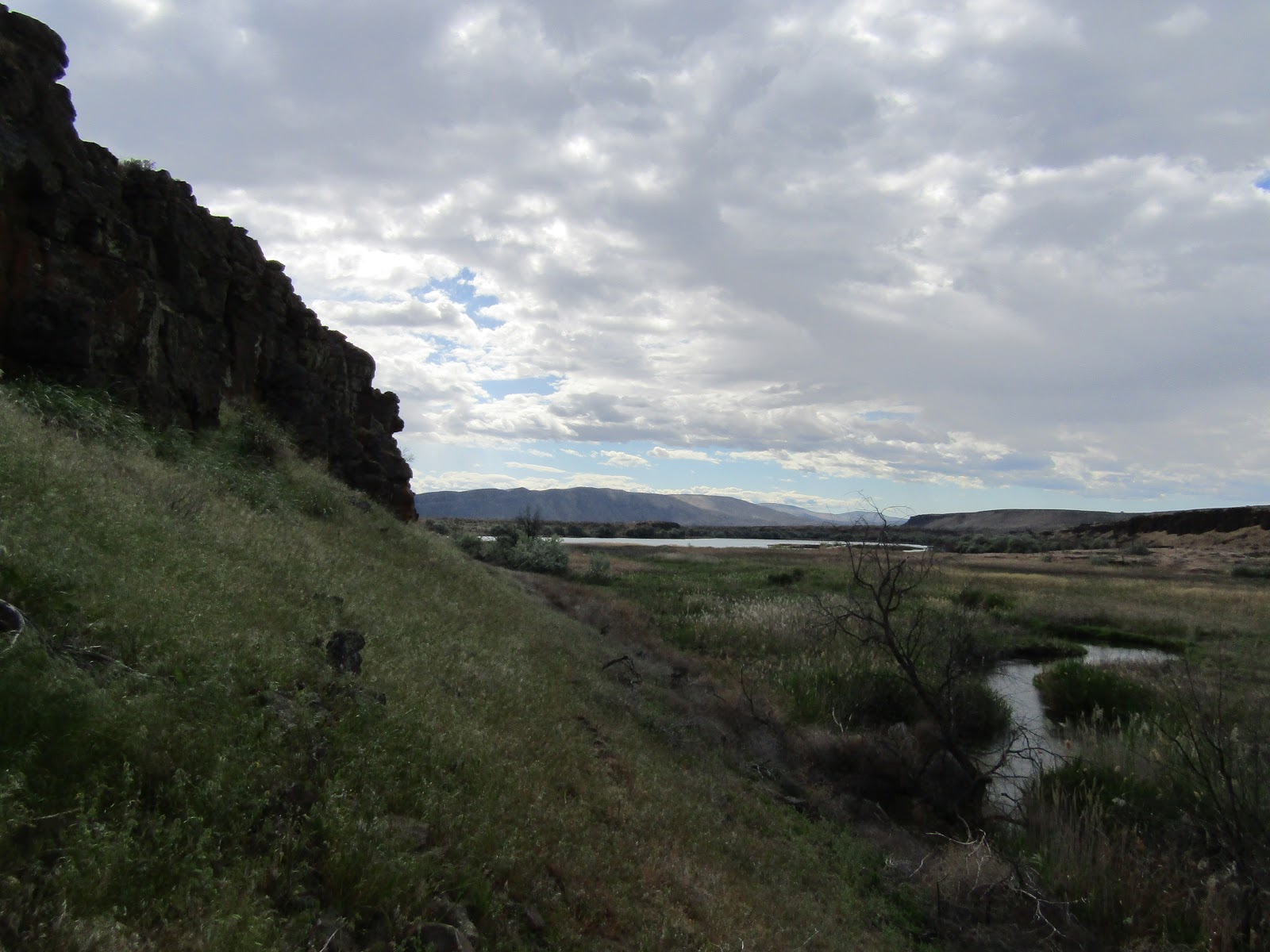
Walking near Crab Creek, north of Mattawa/Desert Aire, WA
May 2018
A mother came into her kitchen and found that it was being destroyed by her young children. They were definitely up to something. There was a mess of flour, and milk, and eggs everywhere it shouldn’t be. “What on earth are you doing?” she yelled.
The youngest answered first. “It’s almost America’s birthday, and we want to make it a birthday cake!”
It’s a good thing to want to celebrate this birthday. There are a lot of good reasons to do this. Birthday’s celebrate hopes and dreams, and they celebrate the heritage of the life carried in a person, or in a community, or even a nation.
Our nation’s birthday was an important day in my family, growing up. In his later years, my dad lost enough weight to fit into his old Navy uniform again, and he would put it on first thing in the morning and march out of the house, carrying the flag, and setting the flag in it’s bracket on the front of the house and saluting the flag at attention. My mom liked to spend part of the day watching Jimmy Cagney play George M. Cohan in “Yankee Doodle Dandy”, which seemed to be on TV every Fourth of July. By the time I was twelve, I took over setting fire to our fireworks.
The dog and cats celebrated the evening of the fourth by hiding. Some of the neighbors fired guns loaded with blanks, just like they would do on the stroke of the New Year.
The Nez Perce tribe in Idaho celebrate Independence Day in the middle of their summer powwow. The last week in June and the first week in July they celebrate what they call Talmaks. It’s also called “Presbyterian Camp Meeting of the Nez Perce Indians”. They’ve been doing this since 1897.
The Nez Perce were the tribe that sent messengers east to the settled lands of the United States, back in 1831, to ask for “the white man’s Book of Heaven”. Their mission was to ask a wise man to come to their people and teach them the message of the Bible.
A lot of Nez Perce people have long considered themselves to be a Christian tribe. The Nez Perce Wars were fought by the part of the tribe that didn’t want the Book. That part of the tribe is still fighting, to tell you the truth.
As the Presbyterian Camp Meeting would tell you, the most important part of the powwow is worship, study, and prayer.
The next most important part of Talmaks is the Fourth of July. A lot of the Nez Perce men enlist in the armed forces and become veterans. Independence Day is a big day for them: serving their country as warriors along with celebrating their identity as a Christian nation.
Well, they like to call their tribe a Christian nation. The truth is it doesn’t always look that way. As a nation, there's some debate among them, but a lot of them do their best to make it so.
That’s sort of like us, isn’t it? I remember the days when, if you asked someone if they were Christians, their answer could very well be: “Of course I’m Christian, I’m an American!” Although, back in the day, I was learning how to be a Christian in fellowship and not alone, and my most valued fellowship consisted of people who didn't buy that logic. On that point we might not have been any better Christians than they were, or anybody else, for that matter.
By the way, did you know that, legally speaking, Christ is the King of Poland, and the Virgin Mary is the Queen of Poland? It’s in their constitution, but I wonder if they’re doing a very good job following their King and Queen.
We want our nation to be truly Christian, and that means we want our nation to act in the spirit of Jesus doesn’t it? We want our nation, in this world, to have a role like the role Jesus has in this world. Then, as old as I am, I take a look at what I’ve wanted our country to do in the past, and it didn’t always seem very much like Jesus when it was all done. It’s hard to be a Christian nation if that means being a nation where the people see to it that their government behaves like Jesus.
This shouldn’t surprise us, though, if we know even a little about the Book of Heaven. That Book regularly tells us that even when God himself makes a collection of people into His Chosen People, it’s very hard for them, with all of God’s help, to live up to that.
There are certain themes and ideas that run all the way through the many books of the Bible from cover to cover. From cover to cover, the Bible is the love story of God for his broken creation from birth, to failure from the start, to the sacrifice of God, in Jesus, on the Cross. To the wedding and the happily ever after in the Book of Revelation. That’s one theme that runs through it all.
Another theme is God’s proposal of marriage, over and over again, to Noah, to Abraham, to Moses, to Joshua, to David, to the prophets, to the disciples of Jesus (which means us). This is our engagement, as disciples of the Lord, to be his bride, to be his people, to be his nation and kingdom.
Well, the Church could become the heart of a Christian nation. But it’s awfully hard to be that kind of heart of a nation without being heart sick.
Our readings from Deuteronomy and First Peter tell us a bit of what it’s like to be God’s nation, God’s people. Our Bible readings tell us, in that sense, what our heritage is when we celebrate the Church’s birthday on Pentecost. Our readings tell us, as the heart of our world and as the heart of our nation, what our heritage is. It tells us the heritage of how we go about helping our nation celebrate its life as we beat quietly, deep inside it, as any healthy heart usually does.
The first clue, in our scriptures, to our God-given heritage, if we stand in our nation and in our world as its heart, is that this heritage is a miracle. The miracle, as Moses puts it, is that God chooses us to be his people even though he could have chosen anyone else. How could God have chosen Israel, or us?
Although everything in heaven and earth belongs to the Lord, “Yet the Lord set his affection on your forefathers, and loved them, and he chose you, their descendants, above all nations, as it is today.” (Deuteronomy 10:14-15) What a surprise, that God would settle for us. Earlier in the Book, the Lord and Moses tell Israel that they weren’t chosen because they were great (7:7) or good (9:5) but only as a demonstration of the Lord’s powerful faithfulness (Deuteronomy 7:8-9 and 9:29).
Peter means the same thing when he writes this: “Once you were not a people, but now you are the people of God. Once you had not received mercy, but now you have received mercy.” (2 Peter 2:10) We “are a people of God, that you may declare the praises of him who brought you out of darkness into his wonderful light.” (2:9)
There is no light in us, but there is wonderful light pouring into us from Someone who is not us, but who loves us perfectly in spite of who we are.
That is, surely, a wonderful light. Isn’t it?
No nation, and no church, is chosen by the Lord because it is great and good. It is chosen because God is love, and God’s love is absolutely faithful. God has never, ever, left his people. God has never left Israel. God has never left the Church. God has never left his violent, broken world. The history of the Chosen People of Israel as a rebellious nation is told in the Bible. The history of the Chosen People of the Church as a rebellious nation is told to us in history.
It’s the same story, the same history, the same heritage. It’s the same story here with us.
Knowing this is a very great relief. Thank God, we are not in our own hands alone. We are in the hands of the perfectly faithful Lord. It’s a great and perfectly humbling, humiliating miracle. It’s all about being love. Apply this to yourselves. Apply this here and now, in this place. Apply this to our nation. This is a heritage worth celebrating.
We were a small population on the shore of the Atlantic; colonies of the greatest naval power in the world of that day, and God saved us. George Washington and the small, poorly trained and poorly paid colonial armies lost most of their battles. When they won, it always seemed like an accident, like luck, or like the intervention of God.
Our heritage of somehow being brought into being from outside ourselves, to belong on the inside of the center of the history in this world flows from this. Our nation seems to have a purpose from God for changing this world for good, though we were once so small and weak, at the start.
Now we belong. We are insiders, and this should remind us that we were once outsiders. This isn’t as bad as it sounds. It means our heritage is a God who loves outsiders and loves to make them insiders.
The method for getting into our heritage as a nation in God’s hands is described when Moses and the Lord tell his people that part of their obedience is to love God by imitating him. “Walk in his ways.” “Circumcise your hearts, therefore, and do not be stiff-necked any longer.” (Deuteronomy 10:16) Our heritage is not an itemized check-list of rules, but a matter of the heart.
Walking in the Lord’s ways is like being a little child following their father in the snow. The child sees their father’s footprints and jumps to make sure that their feet go into those big footprints.
The last thing the child wants is to miss a single step. You might call this a fear, but it’s the fear motivated by love. You bite your lip at every step you take, and every good step is joy.
At every step gone wrong, you don’t stop but you try for the next step. It’s more like a dance than a walk. It’s all a matter of the heart and, with God, your alien heart has become a child’s heart and new every morning.
Our heritage of being the outsider brought in is the heritage of an alien finding a new, safe, free, beloved home. This has the strange power of not making you selfish about coming home and wanting to keep home for just yourself. You love the hospitality of the Lord, and this is part of the path of his footprints that you are jumping into, step by step, in a dance that is bigger than you are.
You and I all live in the hospitality of God, and your own heart becomes a place of welcome. You become the welcomers of outsiders. We know that the church is not only for us but, most of all, for others. We know this.
Those who have a Latin/Spanish culture have a saying: “Mi casa es su casa.” (My home is your home.) When the outsiders come to your house, they are not guests, they are family. If they are family then they aren’t held to the standards of guests. They are better than guests.
When outsiders come to your church, they are not guests. They are family who are welcome to make themselves at home-church with you, and they graciously share their ways with you and it is part of the joy you feel because they have come inside from the outside, and you know what it is like to do the same. With God you are strangers who have found a home.
Peter says the same, only he says to show the same hospitality to outsiders when you are with the outsiders outside your own house, or outside this house. You know you are an alien, so that they don’t feel like aliens to you. You and they are the same and this is a great miracle. But this is not a miracle that you indulge in by living down to it. You stoop down to lift others up.
You don’t just go along with everything. Peter says: “Live as free people, but do not use your freedom as a cover-up for evil.” In other words, don’t use your friendliness as an excuse for going against the Lord’s values: remember that you are still an alien yourself for God’s sake. “Live as servants of God.” (1 Peter 2:16)
When the church has the heritage of hospitality built on the sympathy of your own alien experience, then the church will go outside itself. We will volunteer to be aliens in a world of people who feel perfectly at home without us, and who don’t realize that they are aliens who do not know yet what’s so good about coming inside God’s love.
They might well see something wrong with you, and they will see you as the aliens with themselves as being the ones who belong as insiders. But something will click and they will see something good behind you and come in before they know it. “Live such good lives among the pagans that, though they accuse you of doing wrong, they may see your good deeds and glorify God on the day he visits us.” (1 Peter 2:12)
Goodness, in the languages of the Bible, has nothing to do with a daunting list of rules. True goodness doesn’t earn a gold star on a chart.
True goodness is experienced as thriving. True goodness is like serving chocolate gelato (like ice cream but much richer) to someone who has never eaten it before. True goodness is having someone smile at you when they have put a bowl of chocolate gelato in your hands.
That’s what a servant of God wants to do. That’s the heritage of a church that is being a servant. How can we find a way to give chocolate gelato to our neighbors and to the communities around us, so that they glorify God with us on the day of his coming? How can we give them something richer than they have ever tasted before?
You know that if you pass your neighbors some chocolate gelato over the fence, they will likely come to your door. If the Church could pass out that chocolate gelato, we’d have people coming in. But it’s got to be something surprisingly stunning.
Our nation is like a big bowl of chocolate gelato in a painful and desperate world. We should be so glad about this, as a nation, that we would also enjoy those who come knocking on our nation’s door. It’s the real meaning of disciples, the church, and the blessed nation being a city on the hill.
Jesus said, “You are the light of the world. A city on a hill cannot be hidden.” (Matthew 5:14) Some people think that the city on the hill is simply visible to all: that it is simply an example to others, and not their actual destination for arrival.
Jesus was really saying: “You are the new Jerusalem.” Jerusalem was the city on the hill. You could see it in the distance, for miles and miles. But Jerusalem was much, much more than visible. Jerusalem was a destination. It was the place where people would love to come and stay for the purpose of worship and offering their sacrifices and themselves to the Lord. In message of the Old Testament prophets, the nations of the world were all going to come to Jerusalem. All the old enemies and destroyers would come there to worship. “In the last days, the mountain of the Lord’s temple will be established as chief among the mountains; it will be raised above the hills, and all nations will stream to it.” (Isaiah 2:2)
When a nation truly has a heritage from the Lord, it will be like a temple where all the nations will want to come. It’s a great blessing. In the story of the whole Bible, from beginning to end, a nation belonging to God will draw all the nations in. That’s the heritage that those who hunger for a Christian America will discover. We will just be too good.
Under God, we are blessed to be a blessing. The Lord said it to Abraham, and it applies to the Church, and to any people of God. “You will be a blessing. I will bless those who bless you, and whoever curses you I will curse; and all peoples on earth will be blessed through you.” (Genesis 12:2-3)
Now, I’m going to quote a politician of yesterday.
In his “Farewell Address” Ronald Reagan took up the theme of the city on the hill, and he got it right. He was a good, smart, decent guy. Here it is.
“I've spoken of the shining city all my political life, but I don't know if I ever quite communicated what I saw when I said it. But in my mind, it was a tall proud city built on rocks stronger than oceans, wind-swept, God blessed, and teeming with people of all kinds, living in harmony and peace - a city with free ports that hummed with commerce and creativity, and if there had to be city walls, the walls had doors, and the doors were open to anyone with the will and the heart to get here.
That's how I saw it; and see it still. How stands the City?
And how stands the city on this winter night? More prosperous, more secure and happier than it was eight years ago. But more than that: after 200 years, two centuries, she still stands strong and true on the granite ridge, and her glow has held steady no matter what storm.
And she's still a beacon, still a magnet for all who must have freedom, for all the Pilgrims from all the lost places who are hurtling through the darkness, toward home.”
Our heritage is not always something you are born with. A heritage may be a gift given in hospitality by those who were there first. But our heritage, as the people of God in the Church, is the heritage of being aliens who have come home. We give to other aliens, as they come to us, the same heritage that the Lord has given us in Jesus. We make people who were not a people into our own people, in the church. This is sacred. This is the gospel; that we are saved by gift, saved by grace, and saved as we come home by faith. In the Church of Jesus, the Bride of Jesus, we welcome the aliens home.
Any nation that would be a Christian nation will have the same heritage as those who belong to Jesus. That nation will do for others what Christ has done for us. Every church that that loves the gospel, the good news of Jesus, will be eager to welcome outsiders. Every nation that loves the good news of what God has given their country will be eager to welcome outsiders. The church that enjoys the blessings of God will bring people in. The nation that enjoys the blessing of God will bring people in.
The church has to be like Jesus: welcoming wandering outsiders home. We have no choice besides this one, or (if we do have a choice) we have a choice of heaven or hell. The Church, or what seems to be the Church, will live or die by this choice. “For you were like sheep, going astray, but now you have returned to the Shepherd and Overseer of your souls.” (1 Peter 2:25) How we give grace to those on the outside will be the sign of our belonging (or not belonging) to the Shepherd who welcomed us aliens from outside.
In the day when God visits us, all nations will live or not, according to the heritage they asked for and chose for themselves.
The Bible tells us about the heritage that belongs to those who were outside and welcomed in. That’s the only heritage that God can give us. Let that be our heritage, as a Church and as a Nation. Let’s live by that.

Wednesday, February 15, 2017

Faith for Life - The Mission of Hospitality

Preached on Sunday, February 12, 2017

Scripture readings: Exodus 16:1-12; John 6:1-15

There’s that joke that you say when you’re getting to know someone and you say, “You can call me anything. Just don’t call me late for supper.”
Along Crab Creek, Desert Aire/Mattawa, WA
January 2017
On this occasion, Jesus seemed determined to avoid this at any cost, only supper didn’t cost him anything. It only costs the kid who supplied Jesus with the supper to be served. Jesus was determined that the crowd, that seemed to follow him everywhere, wouldn’t be late for supper.
John, in his gospel, is going to take one of the most popular stories about Jesus and make it into one of the deepest stories of Jesus. Tradition tells us that John wrote his gospel late, because he saved the writing of it until he was old, and tradition also tells us that John lived to be almost a hundred years old.
Writing as late as he did, John seemed to know what had been written in the other gospels, and he mostly avoided repeating them, in the sense that his gospel repeats very little of the other gospels except for a scene in the Temple, the walking on water, the trial, the crucifixion, and the resurrection. He tells us about the Last Supper too, but only about what happened before and after supper.
Well, back to the feeding of the five thousand, John finds ways to tell us that it was more than a miracle. Remember that John, in his twentieth chapter, tells us that he chose to write what he wrote so that those who read him could know who Jesus is, and, knowing, have life in his name.
As for who Jesus is, John shows us that those who know him best know that, as spontaneous and surprising as he seems, Jesus is more than a miracle worker. Jesus is a miracle planner.
But John shows us more than this. He shows us that Jesus is a miracle planner because he is our care-giver and Jesus is our host. Even more than being an example of care giving, this miracle is just as much about hospitality, about being our host, as it is about anything else.
As for having life in his name, John shows us that the life we have in Jesus’ name means that Jesus gives us the grace of involvement in his planning, and in his caregiving, and in his hospitality. We see this in the questions that Jesus asked his disciples, in his concern for providing a meal for the crowd right from the start. We see Jesus involving us in the life of the grace of his hospitality in the way that he drew one young boy to share his supper with him, and with the whole crowd.
Just as he did with the Last Supper, John skips over most of the day. The other gospels (at least) tell us that, between the coming of the crowd and the feeding of the crowd, Jesus did many things and said many things.
The other gospels tell us that Jesus healed the crowd and taught the crowd. John only tells us that Jesus saw the crowd coming, and that he fed them, and (after he fed them) that he ran away from them.
John tells us that Jesus thought about feeding them as soon as that day began, as soon as he saw the crowd coming from a distance around the shore of the lake. He asked his disciple Philip, “How are we to buy bread so that these people may eat?” And John tells us about Jesus the miracle planner because, with the question to Philip, John tells us this about Jesus’ question: “This he said to test him (to test Philip), for he himself knew what he would do.” (John 6:6)
The other gospels tell us that feeding the crowd came late in the day. (Matthew 14:15-16; Mark 6:35-37; Luke 9:12-13) John tells us that Jesus was still thinking about it as the day went on, and that the disciple Andrew found a boy who had food leftover: five flatbreads and two pickled fish.
By the way, Galilee produced a pickled fish product that was famous all over the Greek and Roman world. It was a big cash export for Galilee. It was an expensive delicacy all over the empire; but it was common fare in every hut and cottage, in every local town and village that Jesus and his disciples knew.
It was also true that, in the world that Jesus and his disciples knew best, most people walked everywhere. This took a lot of time, but it was so much part of their lives that they knew how to do it. They were always prepared. They took the time because there was no other way, and they took food with them.
The Jews were famous for walking around with a basket at their side. It was part of their costume. They hadn’t really worried about food because they had brought something to eat with them, but now that it was late in the day and perhaps their food was gone. They probably knew that this would happen.
Jesus knew exactly what he was going to do, but his disciples, just like us, never knew what Jesus was going to do next. Jesus was taking so long to heal and teach, and now it was late in the day. The Feast of Passover was near, and so the moon was getting fuller, and the people would probably finish their day by walking home in the moonlight.
They had finished the food they brought, and they were subsistence people who were used to empty stomachs. But there was a boy close enough to Jesus, and to the disciples, that Andrew knew he had leftovers. If there had been boy scouts in those days, this boy would have lived up to their reputation of always being prepared. He came packed and ready to camp out.
Jesus had planned, right from the start, to do the unnecessary. He had planned to be the good host. He planned to give everyone a good supper for the hike home.
There was a trick involved. Jesus played his disciples and he let them think that he didn’t know what he was doing, or what he was going to do. But, the truth is, they would have wondered anyway. They should have known, long before, that Jesus knew what he was doing and that he could do anything; but they didn’t seem to know this.
This is exactly what the people of Israel were like in the Old Testament. In their escape from slavery in Egypt, the Lord had already shown them that he had a complicated plan, and that he was able to do anything to accomplish it. The Lord had already demonstrated this to them, but they couldn’t keep the faith. So, they were surprised that the Lord was able to feed their multitudes in the wilderness.
The Lord held them in suspense to make an impression on them. He did it to help them keep the faith, and to remember that he cared about them, and that he was more than able to truly provide for them.
Jesus showed his people, and us, that the same thing is true of him. We truly see the God of creation, and the God who leads his people to freedom, and the God who could provide for his people in the desert, when we see Jesus. John tells us this so that we can read what he has written and know who Jesus is, and have life in his name.
John is going to make this even deeper, because he will follow up the feeding of the five thousand, later, with a conversation in which Jesus would tell the people that he is the bread of life. Jesus would go on to tell them, and us, that he was going to do something for the whole world that would make him real food and drink for all of us.
They didn’t understand him, but we know that Jesus’ death for our sins on the cross, and his rising from the dead, are our food and drink. It is love that empowers and fills us up. It is the real way that we have life in his name. It is also the great work that we are called to share, and to offer to the whole world in his name.
Jesus is the great host. Just as feeding the crowd was not expected, and no one would have considered it necessary, the cross and the resurrection of Jesus are like that. Jesus did it out of love, and not because was necessary: not because it was necessary for him.
Of course, it is necessary for us: absolutely necessary. There is nothing that we need more than for Jesus to be our host and feed us and quench our thirst with himself.
The unnecessary feast was only needed for the crowd to get some idea, if possible, of who Jesus was, and is. We can’t truly know who Jesus is, unless we eat and drink him as he gave himself to us on the cross and in the resurrection. Then we know who he is: that he is the perfect host and care-giver who planned, from the beginning, to give us life. Then we can have life in his name.
The life we have in his name means something even more than this. If our Lord is the perfect host who gives himself for the life of the world, then life, in his name, means our learning to follow him. Life means learning to be what he is for the world and (again) we can only be what he is when he is our very subsistence; when he is our food and drink. We can only live for him if we eat and drink Jesus.
So, our calling is hospitality. There are many important things we do together. We worship. We pray. We sing. We eat together. We share our joys and concerns in prayer; and we pray for the whole world. We form a family and a friendship together. We support missionaries in their work around the country, and around the world. We learn to share our faith with others; meaning that we learn to share the good news of Jesus: who Jesus is, and what he has done, and why it matters. These are all important things.
The meal by the sea was an expression of hospitality. Hospitality bound the host and the guests together in friendship. They would belong to each other as a result. Jesus was pledging his loyalty and the loyalty of his disciples, and the loyalty of the boy with the food, to the crowd. Hospitality in the ancient Middle East did this.
All the important things we do together are not what Jesus intends, unless we can be hosts for Jesus. As a single guy who doesn’t clean his house, I am a terrible example of this. But, even so, I almost always ask whoever is at the door whether they want to come in: unless it’s the UPS guy or someone like that.
Jesus fed the crowd in order to give his disciples a mission of hospitality, and we have the same mission. It isn’t only about potlucks, or about eating together. Hospitality is doing for others an unexpected and unnecessary thing that promises our loyalty, and our commitment, and our belonging to them.
How can we show the world around us that we belong to them? I don’t know the answer to this, but I believe that the Holy Spirit, the Spirit of Christ, can give us a special calling in this direction.
For the disciples, and for the boy with the food, feeding the crowd was impossible. They only had a very little bit to give, but that little bit was something worth giving, because Jesus was more than able to bless what they shared.
We want Jesus to bless something that we can share. Jesus wants to bless something that we have in our power to share, even though it looks impossible to us.
Sometimes we are like those disciples who were stuck at the point where Jesus let them wonder about everything. Jesus let them wonder whether they were able to believe that he knew what he was doing. He let them wonder if he had a plan, and whether he was able to do it. Sometimes we are wondering just like them.
Jesus loved them just as they were. But he wanted them to be something more.
So, he gave them signs. John calls them signs. We would like to think that John’s word “signs” means miracles, and that Jesus is simply the miracle worker, but signs mean something more than miracles. The signs of Jesus were designed, like John says, to help us know who he is and to live accordingly, in his name.
We are called to trust and to pray for the miracle of being Jesus in this world. The feeding of the crowd tells us not only to feed the hungry, but to be his hosts to the world.

We are called to Jesus’ mission of hospitality. Then the world can meet him, and know him, through us, and through the signs of our lives. Then the people around us can find life in his name.

Tuesday, November 1, 2016

Journey of Faith - Partnership with God

Preached on Sunday, October 30, 2016

Scripture reading: Genesis 18:1-25 ff

There’s a joke that asks the question: “Do you know how to make God laugh?” And the answer is this: “Tell God your plans.”
Tall Timber Ranch
Leavenworth, WA
October 2016
When we begin to love and trust the Lord, we also begin to have a sense of humor about the difference between our priorities and the Lord’s priorities. We grin and confess that God knows what he’s doing.
But the Bible (in the stories of Abraham and Sarah) shows this joke working the other way. The question is: “Do you know how God makes you laugh?” And the answer is this: “God makes you laugh by telling you his plans.”
God made Sarah laugh by telling her his plan for her to have a baby in her old age. Sarah wasn’t particularly guilty in her laughter. In the chapter before this (Genesis 17:17), Abraham also laughed at the very same promise. He had heard the same, basic promise, in one form or another, so many times, and nothing ever came of it. How could it?
Eventually, the baby would arrive, exactly as promised. Each time Abraham and Sarah laughed at God’s plan for them to have a baby, God told them to name the child “Laughter”. The Lord told them to name the baby “Isaac” which means “laughter.” True to form, when that baby was born, Sarah did laugh. (Genesis 21:6) Or, at least she claimed she did.
Isaac was God’s joke on them. It was a sign that God understood laughter and, for God, even the laughter of disbelief is not a disqualification for true faith. The old couple who laughed at the impossible are the parents of our own faith.
This has a lot to teach us about the journey of faith, which is a kind of partnership with God. And it has a lot to teach us about the journey of prayer, which is also a partnership with God.
Faith and prayer are a way of what we might call “living in the presence of God.” This, in fact, is what human beings were created for. The story of the Garden of Eden teaches us that you and I, along with all human beings, were made to be at home in a place, and in a life, where God comes, and meets with us. The whole world was meant to be in sync with heaven and the kingdom of God.
But Adam and Eve teach also us that we have wanted to get a bit outside of the presence of God. Only the problem is that you can’t get just a little bit outside the presence of God, and his life and glory. The world, as it is, shows us what comes from being a bit outside the presence of God.
This mysterious meeting in which the Lord came to Abraham and Sarah in the form of three men tells us about what it’s like to “live in the presence.” It tells us about faith and prayer.
It shows us that there is a pattern of give and take, in faith and prayer. It really is a relationship, and that relationship is personal. God takes his relationship with us personally. God weighs his part in it. God weighs his input, and pushes us, and pulls at us, and God is not afraid to make us laugh. God is not afraid to make promises that we will doubt and laugh at.
The story’s strange. In a world like ours, and with people such as we are, it should strike us as strange, and a little crazy, seemingly, and a little laughable.
Abraham’s head was probably nodding as he sat in the shade of the flap of his tent, at siesta time, in the heat of the day. Suddenly he saw three men in front of him, standing out in hot the sun. We don’t know how he knew that he was in the presence of the Lord. Abraham speaks to them as if they were one, and they speak to him as one. In the next chapter, the three become two.
Let’s not worry about what this means. Meeting God is strange. Faith is strange. Prayer is strange. Face it!
Abraham ran up to them and bowed with his forehead, touching the dirt. He called them Lord. Why did he offer them water to wash their feet? Were God’s feet dirty?
He begged them to stay for a morsel, and off he went, running all over the place. First he ran into the tent to have Sarah bake three loaves of bread.
Then he ran to the cow herd, and slaughtered a prize calf on the spot, and told a kid to skin it, and clean it, and roast it on a spit over the fire. How long was all this going to take?
When everything was ready, and the places were set, Abraham stood beside the picnic cloth waiting to serve as needed. The good host is there to serve.
This is hospitality, and it runs all the way through this chapter. All the way through, in his actions and words, Abraham showed that he was putting the Lord infinitely higher than himself, and putting himself to the side.
This is part of the strangeness of prayer and faith, because people like us always want life to be about us. We want to come out on top, even with God.
The Abraham sort of hospitality is a lesson for us. We learn to speak with God, and listen to God, while we stand to the side of ourselves. In prayer and faith, we stand to the side of ourselves, and we make room for God to be God.
At the same time, God is also our host, with a hospitality all his own. The Lord treated Abraham like a fellow expert, or even as a critic. The Lord stood to the side of himself in order to show Abraham what he was working on; what he was up to.
The Lord was like an artist standing away from his art to let someone, whom he wants to please, enjoy it. The Lord was like a cook, with something on the counter, or on the stove, standing aside to show the guests the meal the cook is making for them. Although God is God; God sees us as his family, or his friends, and stands aside to make room for us. God came as a human in Jesus to make room for us.
When the Lord said of Abraham, “Shall I hide from Abraham what I am about to do?” And the Lord also said, “For I have chosen him, so that he will direct his children and his household after him to keep the way of the Lord by doing what is right and just…” (Genesis 18:17-19) The “I have chosen him” part is a friend word. It’s a partnership word.
Hebrew is so different from English. This word “chosen” is also a word of recognition. It is like suddenly recognizing that the person in front of you is a friend or a potential partner. It’s like love at first sight.
I knew a widow who remembered the day she first met the man who was going to become her husband. The year would have been about 1920. She was walking, with a friend, down the Main Street of her home town, and she saw two young men leaning against the wall of a store; and she saw one of the young men point at her, and say to his friend: “I’m going to marry that one.”
Chosen means a recognition like that. Sometimes our own recognition of God comes like that. We sense that God experiences the same thing with us all the time: love at first sight, all the time.
The idea is that the Lord has decided that Abraham is more than a creature: and so are we. Abraham is the friend, and even the partner, who needs to be in on the secret. Abraham shares responsibility with the Lord for getting a certain job done. That job is being a blessing to the world. The job includes understanding what is right and just, and living accordingly.
Abraham took the Lord up on this and became the Lord’s partner in the matter of what to do about Sodom and Gomorrah. Abraham said: “Far be it from you to do such a thing: to kill the righteous with the wicked, treating the righteous and the wicked alike. Far be it from you! Will not the Judge of all the earth do right?” (Genesis 18:25)
These strange things, called prayer and faith, make for pretty daring talk. The point is that this is the talk of partners, as unequal as we are to God. We are God’s partners in caring about what is right and just, and doing it, and making sure that we’re on the same page with God.
In some strange, way God agreed with Abraham about what was right. In the same strange way, God agrees with us about the way things should be.
We see what it means to live out our agreement with God, when we pray the Lord’s Prayer: “Thy kingdom come, thy will be done, on earth as it is in heaven.” (Matthew 6:10) Praying “thy will be done” includes the prayer for God to enable us to do his will on earth, just as the angels, and our brothers and sisters, do God’s will in heaven.
We are the children of God’s kingdom who have been placed here to do God’s work. We need to ask God what he wants us to do for his kingdom here, where we live. This is what prayer and faith are all about.
Prayer and faith are also about receiving God’s blessings. Part of this includes receiving God’s blessing of partnership that we’ve been thinking about.
It also includes letting God open our closed doors. Sarah laughed, just as Abraham had done, at the closed door of the blessed baby. The baby was their impossibility. It was the thing they could not do. God’s blessing includes what he may tell you about the closed doors of your life.
They had come to terms with the closed doors of their lives, and they had made other plans. It was their way of giving up. God told them to stop doing this.
I don’t know what to say about this. In “The Singing Nun” Sister Maria says that the Mother Superior had a saying: “Whenever God closes a door, he opens a window.”
It may seem like that. That is part of what you and I need to pray about. We need to take God’s blessing into our hearts, and not laugh at it. At least we need to do more than laughing. We need to find the door of God’s promise that we have closed and that God wants open. It might not be what you think.
God arrives, and we hardly know what’s going on. Prayer with God includes our hospitality, God’s recognition, God’s blessings, our questions, our requests, treating God as God.
Prayer and faith are like that strange discussion between the Lord and Abraham about what the Lord was doing about Sodom, and about what was right and just. Life in God’s presence is just that: it’s a discussion.
Abraham wasn’t haggling with God about numbers. Some people think that, if Abraham had argued God down to saving Sodom even if there were only one righteous person there, that the destruction would never have happened.
The discussion wasn’t haggling. It was an exploration in which Abraham got to understand God better. The point is that God doesn’t count numbers at all. If it’s about numbers at all, the story tells us that God values innocent life even when it is a tiny minority. Goodness counts more than evil. Goodness carries more weight. In fact, goodness carries all the weight, all the way.
God understood what it meant to spare Sodom for the sake of goodness, and God had been sparing Sodom all along. God had used Abraham and his men, in battle, to spare Sodom.
The Hebrew word for “spare” (as in sparing the city) is also a word for forgiveness, and it is also a word for carrying something. The gist of it is that forgiveness carries sin: forgiveness bears sins. In his exploration of God, Abraham got a glimpse of something he had never thought of before: that God’s forgiveness means that God carries our sins. In some way, the burden that God carried in Jesus on the cross must have included Sodom.
Justice, in Hebrew thought, is the process of carrying out decisions that will put an end to evil and making it possible for goodness to live. When God forgives our sins because he carried them, in Christ, on the cross, it means God putting an end to the evil within us, and within all human being, and making it possible for goodness to live in its place, if we will embrace this promise.
That is what it means to die in Christ and rise in Christ. It’s part of what Paul meant, in Galatians, when he wrote: “I have been crucified with Christ; it is no longer I who live, but Christ who lives in me; and the life I now live in the flesh I live by faith in the Son of God, who loved me and gave himself for me.” (Galatians 2:20)
Abraham didn’t see all of that. He only saw that God might do such a thing as carry the sins of sinners so that they might live.
If Abraham saw anything in his discussion of what to do about Sodom, he saw that God was good and cared about goodness. Abraham saw that God cared about what was right and just. Abraham saw that God could be trusted, even when things didn’t turn out as he hoped and prayed.
The purpose of prayer is to explore the heart of God. Our exploration is for the purpose of knowing God, and living in his presence by faith and trust. God teaches us, as he taught Abraham, that daring (and almost irreverent) questions are not out of place in a life of prayer and faith. You can discuss daring things with your friend; and here we are taught to be God’s friend, and we are taught that God (as God) wants to be our friend.

This is what our journey in life is about. We live by faith and prayer. We learn to be God’s partners and God’s friends.

Tuesday, September 27, 2016

Journey of Faith - The Treasures of Generosity

Preached on Sunday, September 25, 2016

Scripture readings: Genesis 13:1-18
A man’s car had a headlight out, and so he drove over to his favorite mechanic’s garage and told him what was wrong. The mechanic had the right bulb to replace the old one, so he did this while his customer waited. It didn’t take long.
Around Cow Creek, North of Desert Aire/Mattawa, WA
May 2016
When the work was done the customer asked what he should pay and the mechanic said, “You don’t owe me a thing. It was a small job and I’m glad to do it for you. The customer insisted on paying, and the mechanic responded, “For cryin’ out loud; can’t you just let me do something to stretch my soul?”
I puzzle over where Abraham shows fear and where he doesn’t. That fear reflects on his faith. His wife, Sarah, seems to have scared him. That fear of Sarah caused Abraham to make some big mistakes. He also seems to be afraid of other people being generous to him; as if he were afraid of owing them something. But Abraham is not afraid of being generous to others. And, maybe, being generous to others was one way that Abraham stretched his own soul.
 Abraham was not afraid to be extravagantly generous to his nephew Lot. Lot’s father, Abraham’s brother, Haran, died at some point way back before Abraham’s father (and Lot’s grandfather), Terah, took the whole the family about half of the way to the promised land, and stopped there. Abraham called Lot his brother, and the situation in their family may have made Lot seem like Abraham’s baby brother.
Abraham and Sarah being childless, and staying childless over the years, may have seen the much younger Lot almost as if he was their son, and (probably) the heir to everything they had.
The Lord’s promise to make a great nation out of Abraham really didn’t tell him much, and Abraham may have thought that the promise of the blessing could involve Lot. It’s only after Lot left that the Lord specifically spoke about Abraham’s descendants.
The truth is that what the Bible tells us about all this doesn’t give us many details. It doesn’t explain much.
Lot would naturally have started out with his share of the grandfather’s inheritance and he seems to have done very well with it: about as well as Abraham. Lot seems to have been blessed by association with Abraham. But you also have to give Lot credit for taking off into the unknown with Abraham. Lot seems to have started out on the same journey of faith with Abraham.
The Lord had given Abraham the promise of land but not the ownership of that land. Abraham wouldn’t dare to act like he owned the land because other people already owned it. They had homes, and farms, and towns on that land.
Abraham would have gotten in terrible trouble if he acted as though their land was really his. He never owned any of the promised land except for the hill where he buried Sarah after her death. (Genesis 23)
Abraham, and Sarah, and Lot, and their people could never settle in one place because they could only use the land that no one else would claim because it wasn’t worth settling on. They migrated back and forth on marginal rangeland, and so they lived in tents and moved whenever their herds and flock had overgrazed wherever they happened to be.
The more successful they were, the more often they had to move, because the growing herds ate everything faster and faster. It was becoming a problem, and Abraham was finally forced to admit to himself that the only real solution was for him and Lot to divide their herds and go their separate ways.
Abraham was the uncle who had always acted like the older brother. It was true that he was the senior partner and (having seniority) Abraham had the privilege and the right of first choice of the land.
In spite of knowing his rights, Abraham’s generosity kicked in. He refused the privilege of first choice. He gave the honor to Lot.
Lot seems to not have deserved the honor that Abraham gave him. At least he didn’t use the honor very honorably. He didn’t return Abraham’s generosity with generosity of his own. Lot used the choice to his own advantage and, apparently, to Abraham’s disadvantage. Lot chose the best land for himself.
The Jordan Valley was Lot’s choice, and the land there was almost too good. Jeremiah, later on, would call it “the jungle of the Jordan” (Jeremiah 12:5) It was so extremely fertile. It was so well watered. The soil in that valley was so ridiculously good that you could never hope to stretch your soul by living there.
The proof of this was that, at the southern end of the valley, the land sank down to the towns of Sodom and Gomorrah where life was so good that it always went bad. They could have been called “the sin cities”. Lot knew this, and he couldn’t resist.
He had joined the journey of faith with Abraham, but he turned out to be ready for something else. He wanted to live on more than promises. He wanted to live on more than faith. The New Testament Letter to the Hebrews says this about faith: “Now faith is the substance of things hoped for, the evidence of things not seen.”
Traveling on the journey of faith in the promises of God with Abraham, Lot had been living a different way of life: not an easy life but a soul stretching life. It was a life with a purpose, because it belonged to some great thing that God wanted to do in the world.
The promised land was their land even though they never owned it. In a way the whole world was theirs because they lived a promised life. Most of the promised land was very sandy, and it ran through your fingers, and you could never hold the deed of ownership in your hand.
The Valley of the Jordan was rich ground and you could hold a ball of that soil in your fist, and you could hold the deed of ownership to a house in Sodom in your hand, and Lot did just that. He chose a blessing that you could see and hold onto, even though doing that made the good life go bad.
Abraham’s life was based on a promise that he mostly never saw come true, but the substance of what he hoped for was in his heart and in his life. God gave Abraham a lot. Abraham became rich. But what he had was always at risk. Abraham and Sarah were always on the edge; on the edge of drought and famine. They had already seen that before.
Their journey of faith had included scarcity and danger, but they had faith in God’s promises. They had faith, which means trust. They trusted the God who called them to leave everything that made their life secure. They trusted the God who made them part of a great thing he was beginning to do to change the human world.
Because of this, Abraham and Sarah were normally able to live generously. They were normally able to live bold lives. They were also able to give boldly.
They could know scarcity but they didn’t live accordingly. They didn’t feel that their lives were scarce. They felt that they were able to give, and that they didn’t need to be given to. They had enough. They had God. They had God’s promises. It made all the difference in the world to have that.
The choices of Abraham and Lot tell us about our own choices if we want to travel with God on the journey of faith.
Lot chose the gold. He chose the sure thing, the safe thing. He looked out for number one. And his number one was himself. By choosing this way, Lot lost himself.
Abraham was generous toward Lot, but he was even more generous to God, because he let God be in charge of all those promises and blessings. He didn’t hold onto what he had with a tight fist. He was gracious to God by putting his life in the hands of the grace of God.
Abraham and Sarah were well off and safe before they left the city and became wanderers in the desert in their old age. In a way they sacrificed their future for the sake of the God who gave them promises that they would never see fulfilled. So they journeyed to the land of faith which they would never own.
For a while it seemed possible that Lot would be their future, in their old age, and yet Abraham let go of that. He let Lot go. Lot could have the first choice and the first claim on the land that God had not promised to him.
Abraham let go of his own rights. He put God’s promises back into God’s hands.
In the future Abraham and Sarah would have the promised offspring: the one son to carry all the promises, and all the future. And then Abraham would have to be willing to offer this one son, who carried all their hope, back to God who seemed to ask for the impossible.
He trusted the God who gave him the promise, and this was the generosity of faith. The faith of Abraham was well placed because God turned out to be the kind of God he had promised to be.
The God who is faithful to his promise makes it possible for us to live with the generosity that comes from faith. We see this God in the gift of Jesus: the only everlasting Son of the everlasting Father. God is the generous giver and the generous gift. “For God so loved the world that he gave his only begotten son; that whoever believes in him should not perish, but have everlasting life.” (John 3:16)
The God we meet in Jesus is the God who gives and does not grab. This God is not like Lot who only grabbed the best.
This God loves to wander through deserts with his people. He loves to give his gifts to those who live on the margins and in the deserts. This God comes to barren lands like our own lives, and makes us his own promised land.
He sent his Son to die for us on the cross, in order to make us his own promised land. In Jesus he gave us his life in order to give us freedom from our sins and freedom from the fear of death.
God delights in his own generosity which we call grace. Gracious giving is God’s glory and riches. Our own being able to give to others is grace.
In Jesus, God would make himself into our own generosity. We might know scarcity of our own, and yet God makes us able to give back to him and to others. Lives in which we are able to give to others are richer than the lives of those who always grab for the gold and for the sure thing for the sake of number one.

The choice to live by giving is, above all things, a choice as well as grace. God organized our lives so that, like Abraham, could choose it: so that we could choose to live by giving. And we can only have such a life by choosing it. Let us choose the life of grace. Let us choose the life of giving. Our God gives us Jesus, and Jesus is the way of giving.