Preached on Sunday, August, 12, 2018
Scripture readings:
Proverbs 18:9-24; John 15:9-17; Philemon 8-16
“There is a friend that
sticketh closer than a brother. (Proverbs 18:24) In these days, we’ve learned
to include the word “sister” in this friendship too.
 |
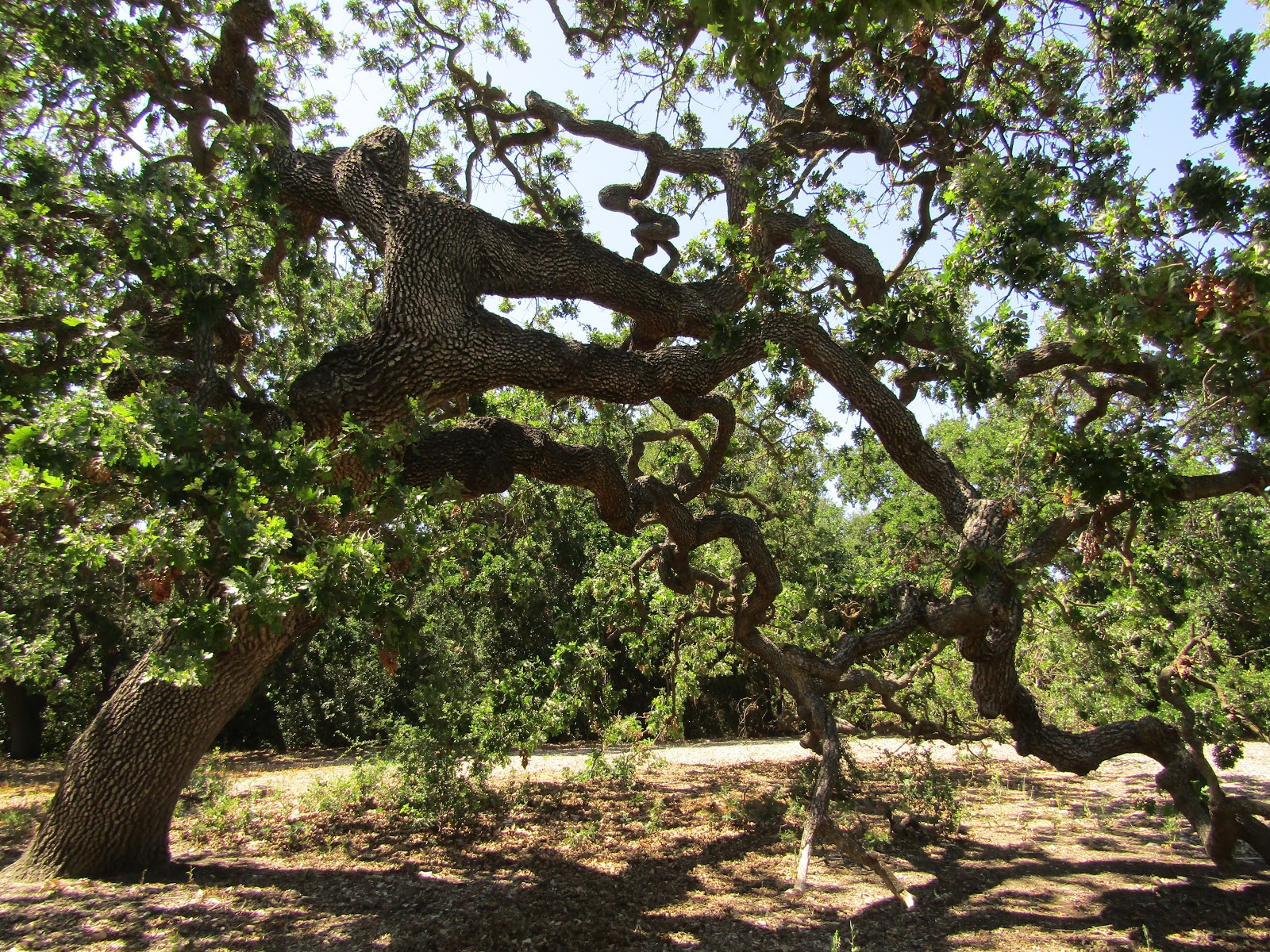
| A community of trees in Southern California June 2018 |
This proverb is a part of
my life because of my cousin Donny; who’s a better Christian than I am and much
smarter too. Don is a couple years younger than I am and he became a Christian
about the time I was starting seminary. He and I had talked before about what
it meant to belong to Jesus, and he was always a good listener. He told me that
a lot of people had been talking to him about Jesus. He took a while to decide
and I’m not sure that I played much part in it. When he gave himself to Jesus, he
grew fast. He was a fast learner.
Don soon found this verse
and applied it to the two of us. When we were a lot younger, and outnumbered
two to one by our sisters, we talked about being brothers. We lived just a few
miles away from each other in those days. Every week, we saw each other and
played together, and it meant a lot to me.
I also always felt that Donny was my friend
and my brother, and in Christ we could be the “friends that stick closer than a
brother.” That’s exactly what we wanted. Only I am pretty sure that I haven’t
lived up to it, which makes me sorry.
If anyone asked me about whether
this proverb was really about friends or else more about brothers, my answer
would have to be “Yes”. Because that’s what my cousin and I were.

The proverbs all fit
together anyway, like the pieces of a puzzle. The proverb has to be about women
and sisters just as much as being about brothers, because there is the other
proverb in our reading: “He who finds a wife finds what is good and receives
favor from the Lord.” (18:22) Surely that’s about finding something even more
than a friend and brother together.
Brothers, sisters, wives,
husbands, friends are a gift and they are the grace and favor from the Lord.
They are a kind of miracle, no matter how much work they take to maintain.
Another piece of the
puzzle is the fact that two brothers are like fortress towns that stand close
to each other. A fortress town was a safe place. Walls and gates were solid
things that you could trust to save you from losing everything, and losing
yourself, to be taken away by enemies into exile or slavery.
The problem came when the
brothers, sisters, or friends fought. I truly wanted a brother when I was a
kid, but as I got older I saw the way brothers fought. That could be nasty.
 In the proverbs, it isn’t
even about fighting, per se. It was about one brother offending the other. I think
you can fight without getting hurt but this was about hurting. We read the proverb
that says: “An offended brother is more unyielding than a fortified city, and
disputes are like the barred gates of a citadel.” (18:19)
In the proverbs, it isn’t
even about fighting, per se. It was about one brother offending the other. I think
you can fight without getting hurt but this was about hurting. We read the proverb
that says: “An offended brother is more unyielding than a fortified city, and
disputes are like the barred gates of a citadel.” (18:19)
When the two fortresses
are friends, and an enemy knocks down your strong, protecting walls, you can
make a run for it to your brother fortress. If you make it to the gate, you
will be safe. But, if you haven’t taken time apart for your brother-fortress
and met your priority to heal each other from the wounds of your fights and
offenses, then your brother-fortress might be closed against you. Having a
brother-fortress, or a sister-fortress, is a miracle. A brother’s or sister’s shut
gate comes when someone has been ungrateful for a miracle. Someone has been
ungrateful for the relationship that makes you stronger than just being
yourself.
There are friends who are
companions. They are connections with whom you eat, and work, and play, and
there are friends who are brothers or sisters and these are miracles, because many,
many companions can never equal one sisterly friend or one brotherly friend.
 “A man or woman of many
companions may come to ruin, but there is a friend who sticks closer than a
brother or sister.” It’s true there is strength in numbers, but Proverbs would
tell us that there is greater strength in trust. There is greater safety in faithfulness.
“A man or woman of many
companions may come to ruin, but there is a friend who sticks closer than a
brother or sister.” It’s true there is strength in numbers, but Proverbs would
tell us that there is greater strength in trust. There is greater safety in faithfulness.
The God of the Bible
teaches us that faith and the faithful object of our faith are stronger than
strength. What happens between one human and another, or between just a few
faithful humans is a model that points to our relationship with God.
God is the best fortress: “The
name of the Lord is a strong tower; the righteous run to it and are safe.”
(18:10) Names (even the names of the Lord) are not magic spells that work on
their own if you remember to use them right. Names (in the Old Testament) were
supposed to reveal what you were made of. The reason that Lord would sometimes change
the name of human being whom he was calling (like changing Abram’s name to
Abraham) was that the new name would reveal that God was making him into a
person who was made of more than he was made of before God took charge of him.
Some people say the name
of the Lord is Jehovah, but that was a misunderstanding and a mistranslation of
the Hebrew alphabet that began in the Middle ages and continued for a few
centuries after that. Which is why Christian hymnbooks and songbooks have the
name “Jehovah” in them.
 The proper pronunciation
is closer to Yahweh. Yahweh is short for “I Am Who I Am” or “I Will Be Who I Will
Be”. God’s name is a mystery that carries the message that God is made of bigger
and greater stuff than anyone can know.
The proper pronunciation
is closer to Yahweh. Yahweh is short for “I Am Who I Am” or “I Will Be Who I Will
Be”. God’s name is a mystery that carries the message that God is made of bigger
and greater stuff than anyone can know.
The message of the name of
the Lord is more than a name. The message of the Lord’s name is that the Lord
is bigger than you think, so trust him and know that you are safe in his
purpose for your life. The reason why the name of the Lord is a strong tower of
refuge is that he is always more than you can ever imagine him to be. “I am who
I Am” and “I Will Be Who I Will Be.”
Friends, sisters, and
brothers are fortresses because we are created to be fortresses for each other.
We are created to be fortresses for each other because God has made us in his
image, and God is the best fortress of all. God is the ultimate strength and
security, and so God has created us to join him in helping, protecting,
sheltering, and loving others as he does.
God is our friend. He’s
doesn’t get that name in Genesis, although that is where we see God confiding
in Abraham, and listening to Abraham, as a friend. Centuries later, during an invasion
of the Kingdom of Judah, King Jehoshaphat, asked the Lord for help and
described the relationship between the Lord and the descendants of Abraham this
way: "Did You not, O our God,
drive out the inhabitants of this land before Your people Israel and give it to
the descendants of Abraham, Your friend forever?” (2 Chronicles 20:7)
 There is a long-term plan, still in effect, and still moving forward, in
which the Lord wants to insert his model of friendship back into a world that knows
almost nothing of such friendship. You and I are a part of this plan to insert
and spread the power of God’s friendship on a lost and alienated enemy planet
called the earth.
There is a long-term plan, still in effect, and still moving forward, in
which the Lord wants to insert his model of friendship back into a world that knows
almost nothing of such friendship. You and I are a part of this plan to insert
and spread the power of God’s friendship on a lost and alienated enemy planet
called the earth.
The plan began with Adam
and Eve. It took a great step forward with Abraham, Moses, and Israel.
And then God came down in
Jesus, so that he and our human race could get hitched together. God hitched
his friendship to us by becoming human, and offering himself as a sacrifice, as
a sin-offering, and as a peace-offering, and as a Passover offering to take us
out of the slavery of a life where we don’t belong. God is the Passover
sacrifice that give us what we need to get to the promised land (or the
Promised Life) where we can live like a fruitful vine, bearing lots of fruit in
every branch; in every single one of us, pruned and prepared.
In Jesus God did this,
letting the sins of humanity kill him on the cross, and then by overcoming the
death created by sin, by rising from the dead. The Lord did this because he is
the one to whom all models of brotherhood, and sisterhood, and friendship
point. Our miracle relationships point in agreement to the greatest miracle of
all.
 This miracle is the Word
of God becoming the action of God, made flesh in Jesus, and offering himself
for us in sacrifice and power. In Jesus, God himself lay down his life for his
friends: for us, and for those to come. Some of those to come will come to this
friendship through us, or through other friends of Jesus who are our friends.
This miracle is the Word
of God becoming the action of God, made flesh in Jesus, and offering himself
for us in sacrifice and power. In Jesus, God himself lay down his life for his
friends: for us, and for those to come. Some of those to come will come to this
friendship through us, or through other friends of Jesus who are our friends.
We will be the friends who
lay down our lives for new friends, and for our oldest and dearest friend,
Jesus. I say this to Jesus, every now and then. When I feel alone I speak to
the Lord for comfort. I tell the Lord, “You are my oldest and dearest friend.”
Jesus lay down his life
for his friends, including us, so that we can learn how to see him as our
friend and lay down our lives for him. When a twelve-year-old child, in some
wild part of this world, would rather be beheaded or crucified, rather than
deny his oldest and dearest friend Jesus, we can see the power of this
friendship. Jesus told his friends that he was doing this so that they, and we,
could bear fruit, “fruit that will last.” (John 15:16)
The truth is that we know
very little of this power. Christians in the western world get angry and loud
at the thought of being humbled, or being pushed to the outside of things. We’re
afraid of being the victims of injustice or discrimination.
 Not that we should be
passive in a free and democratic country. The law allows us freedom of speech, and
freedom to vote and we have a duty to use those rights. And we should speak and
work unafraid, as the friends of Jesus. The friends of Jesus never panic.
Not that we should be
passive in a free and democratic country. The law allows us freedom of speech, and
freedom to vote and we have a duty to use those rights. And we should speak and
work unafraid, as the friends of Jesus. The friends of Jesus never panic.
Knowing the model for friendship
in the Book of Proverbs helps us to know what Jesus is talking about in the
Gospel of John, about the costliness of friendship in the work of bearing
fruit. It begins with the laying down of the life of God, in Jesus, on the
cross. It continues with the laying down of our lives at the foot of his cross:
then, perhaps, we will follow the friendship of Jesus through crosses of our
own. We will go on to carry a cross for others so that others can bear fruit
that will last.
Perhaps we can say it
begins by laying down our lives, here and now, in this place. Then we won’t be,
any longer, quite our own.
You don’t just lay down
your life by suffering. You also lay it down by belonging. You lay yourself
down to make yourself into a safe place for others; to defend and protect
others.
When Jesus gave himself
for his friends, his friendship took on greater and greater power. Our giving
ourselves, here and now, and in the future, will do the same.
The fellowship of the Lord’s
Table, here, is another model of the Lord’s friendship. It’s a model in which
we participate. As we participate, we find that the friendship grows in this
place as we come to the same table (the table of Jesus) together. The bread and
the cup are his friendship that we take into ourselves. What we eat and drink
here becomes the power that gives life to every cell in our bodies.
With Jesus’ offer to choose
and receive us, and with our consent to come and receive him, Jesus himself
becomes our bread of life and our cup of salvation. It courses through our
blood. Jesus courses through our souls, our inner selves.
It’s a meal with friends.
It’s a meal for friendship, and refuge, and mission. It’s a sister-and-brother-fortress.
Belief isn’t about ideas.
It’s about trust and it’s about action based on that trust. As the unbelieving
slave, Onesimus, became a believer and one who trusted Jesus, he also became
like a son and a brother and a friend, at the same time, for Paul. Paul became
his father and brother and friend at the same time. We become friends as close
as brothers and sisters, as we come to this table, trusting Jesus.
 It isn’t that easy to even
come to church. It was very hard for me at one time. It was embarrassing. I had
to trust Jesus more than I trusted my pride and my fears. Even walking our
short aisle to the table takes more giving than you may think. You are coming
to something more than you can see, or hear, or sense, and you are trusting that
this mystery wants to be your friend.
It isn’t that easy to even
come to church. It was very hard for me at one time. It was embarrassing. I had
to trust Jesus more than I trusted my pride and my fears. Even walking our
short aisle to the table takes more giving than you may think. You are coming
to something more than you can see, or hear, or sense, and you are trusting that
this mystery wants to be your friend.
Let’s receive Jesus, our
oldest and dearest friend. He lay himself down for us on the cross. Let’s start
by laying ourselves down for Jesus, and for each other, here, now.


